
Modern learning platforms cannot operate in isolation. The knowledge that powers courses usually comes from an organization's internal documents, processes, and operational expertise. For an LMS to be effective, it must connect seamlessly with these knowledge sources so that course creators can easily turn existing information into structured learning experiences.
Learning itself also happens across multiple contexts today. A learner might take a structured course on a laptop, quickly retrieve knowledge during work, or reference internal documentation to solve a real problem. Because of this, learning platforms need to integrate with the systems where knowledge already exists rather than functioning as a separate, disconnected tool.
Organizations also rely on a wide ecosystem of software for payments, analytics, communication, and knowledge management. Whether a company serves global customers, uses regional payment systems, or manages internal knowledge through tools like Notion, a modern LMS should integrate smoothly into these existing workflows without disrupting them.
This is exactly how Blend-ed was designed as an AI-powered learning platform. From the beginning, the platform was built with integrations in mind. In the sections below, we will look at the different integrations available across several areas such as payments, analytics, AI, communication, and knowledge systems, and how they come together to create a connected learning ecosystem.
Modular Architecture for LMS Integrations
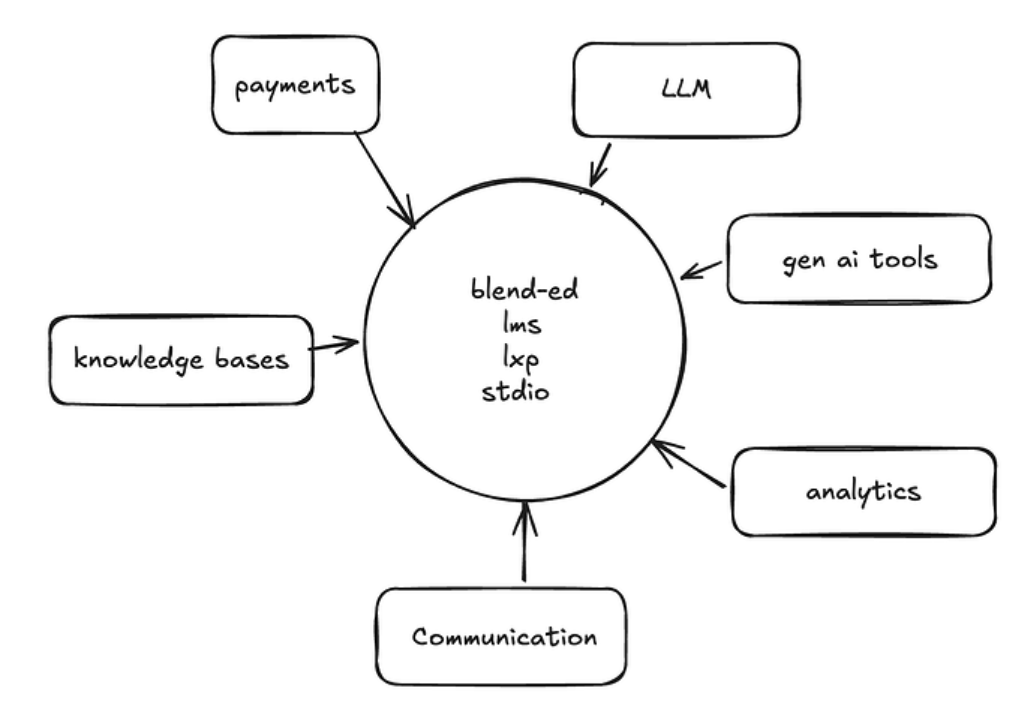
Blend-ed is designed with a modular integration architecture that allows the platform to connect with external services without tightly coupling them to the core system. This approach makes it possible to integrate different tools and providers while keeping the core learning platform stable and scalable.
Because integrations are handled through dedicated modules, organizations are not restricted to a single provider. Payment systems, AI providers, analytics tools, or storage services can be connected depending on what best fits an organization's needs. As technology evolves or requirements change, new services can be added without requiring major changes to the platform itself.
This flexibility allows organizations to build a learning ecosystem that grows with their existing technology stack. In the next section, we will start with one of the most important integrations for many learning platforms: payments.
Payment Integrations for LMS Platforms
Payments are a core part of any learning platform, especially for academies, course creators, and organizations that offer paid training programs. Blend-ed supports multiple payment integrations so platforms can sell courses and subscriptions while accommodating both global and regional payment preferences.
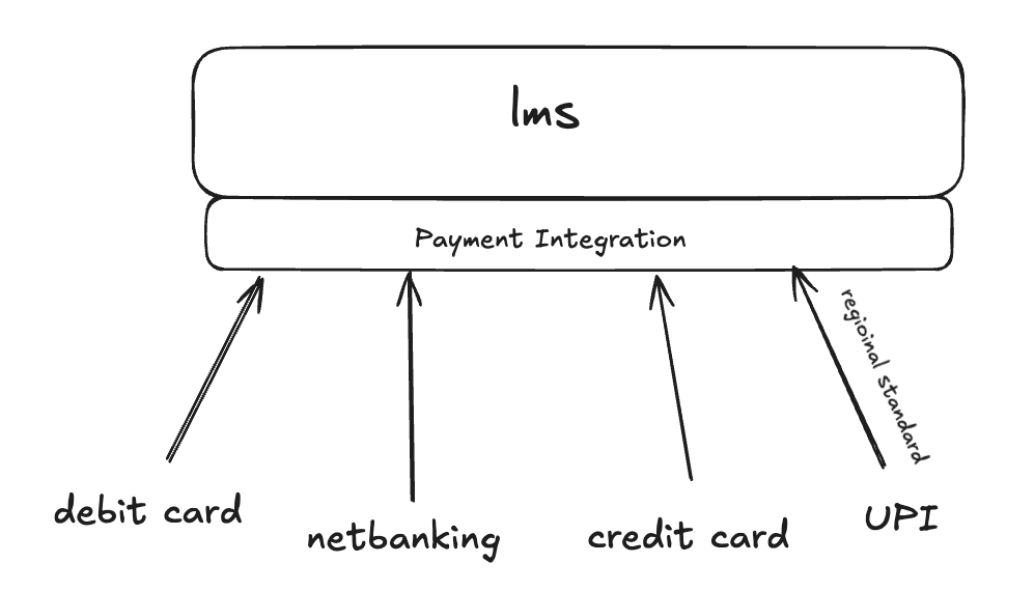
For global transactions, Blend-ed integrates with Stripe, allowing organizations to accept payments from learners around the world. Stripe also enables flexible pricing models such as one-time course purchases and subscription-based access, which is useful for platforms that offer monthly or recurring access to their entire course catalog.
For regional markets, Blend-ed also supports Razorpay and PhonePe, giving organizations the ability to accept payments through locally preferred methods. This is especially useful for training companies and academies selling courses online.
Analytics Integrations for Tracking Learner Behavior
Understanding how learners interact with a platform is essential for improving both learning outcomes and business performance. While Blend-ed provides built-in analytics for tracking learner activity such as course progress, skill development, certificates, and assessment results, organizations often require deeper visibility into how users interact with the platform as a whole.
To support this, Blend-ed integrates with industry-standard analytics tools such as Microsoft Clarity and Google Tag Manager. These tools allow organizations to track learner journeys, understand engagement patterns, and analyze how users navigate course pages and learning content.
These integrations are also valuable for marketing and sales teams, allowing them to track user behavior, measure campaigns, and understand how learners discover and interact with courses.
AI Integrations: Flexible AI Models and Intelligent Tools
AI powers several capabilities across the Blend-ed platform, from learning assistance to course creation and platform management. To support these use cases, Blend-ed integrates with leading AI providers while also allowing organizations the flexibility to use their own AI infrastructure if needed.
Blend-ed supports several capabilities across its AI LMS Platform including OpenAI, Google AI, Anthropic, and Azure AI. The platform comes with models already configured, while organizations can also bring their own API keys based on their requirements or internal AI policies.
| AI Integration | Providers |
|---|---|
| LLM Providers | OpenAI, Google AI, Anthropic, Azure AI |
| AI Video Generation | Synthesia |
| AI Search | Tavily |
Together, these integrations allow Blend-ed to support a wide range of AI capabilities while remaining flexible as new models and technologies evolve.
Workspace and Knowledge Integrations for Learning Platforms
Learning does not happen only inside a platform. Much of an organization's knowledge already lives in tools used every day for documentation and collaboration. Blend-ed supports integrations that allow this knowledge to be connected directly to the learning environment.
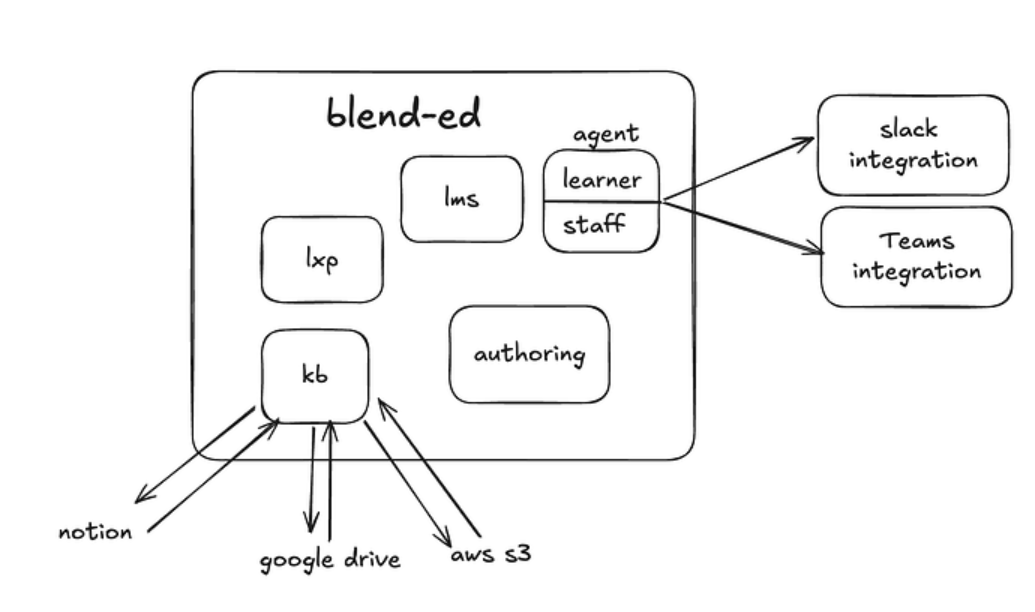
For knowledge sources, Blend-ed integrates with tools such as Notion, allowing organizations to connect existing documentation and internal resources directly to the platform. This enables teams to use their existing knowledge base as part of the learning ecosystem without needing to migrate or recreate content. As organizations store information across systems like Google Drive, Dropbox, and similar platforms, these knowledge sources can be incorporated into the learning experience as the platform continues to expand its integrations.
Blend-ed also includes a native Slack app that allows users to interact with the platform directly from their workspace. Through this integration, learners can access courses, retrieve knowledge, and interact with Blend-ed AI without leaving Slack. Similar collaboration environments such as Microsoft Teams can also support this type of workflow, allowing learning and knowledge access to happen directly inside the tools teams already use for communication.
With these integrations, learning becomes part of the daily workflow rather than a separate system that users need to switch into.
Conclusion
Modern learning platforms need to fit naturally into the technology ecosystems organizations already use. From payments and analytics to AI, collaboration tools, and knowledge systems, integrations play a key role in making a platform practical and scalable.
Blend-ed is designed to work alongside these systems rather than replace them. By supporting integrations across multiple domains, the platform allows organizations to connect their existing tools while building a learning environment that fits their workflows.
As organizations grow and their technology stack evolves, this flexibility ensures that the learning platform can adapt with them.