

There is no single best AI LMS in Saudi Arabia. The right platform depends on whether you train external clients, employees, students or all three, and on the Arabic, hosting and licensing requirements your programs carry.
For professional training companies and commercial academies, a strong shortlist starts with Blend-ed, LearnWorlds and LearnUpon. For customer and partner education at enterprise scale, Absorb, Docebo and Thought Industries are the usual candidates. Classera is particularly well aligned with Saudi education ecosystems, Disprz with enterprise workforce skills, and Oreed with Arabic-native local delivery. Moodle with AI integrations remains the open-source reference for organizations that want full control.
This guide compares all ten on Arabic and RTL support, AI capabilities, multi-client delivery, pricing and Saudi regulatory considerations (NELC and TVTC licensing, FutureX integration, PDPL). The order reflects overall relevance to Saudi buyers and professional training use cases, not an objective universal score. Blend-ed publishes this comparison; the disclosure and evidence standards are in the methodology below.
Best platforms by use case
| Buyer type | Strong options | Why |
|---|---|---|
| Professional training companies | Blend-ed, LearnWorlds, LearnUpon | Client delivery, cohorts, certificates and training operations |
| External customer and partner learning | Absorb, Docebo, Thought Industries | Multi-audience and extended enterprise delivery |
| Saudi education providers | Classera, Moodle | Arabic education ecosystem or institutional control |
| Enterprise workforce skills | Disprz | Skills frameworks and workforce capability |
| Saudi-native training delivery | Oreed | Local and Arabic-native positioning |
Jump to the detailed reviews: Blend-ed | LearnWorlds | LearnUpon | Absorb LMS | Docebo | Thought Industries | Classera | Disprz | Oreed | Moodle
Who is this guide for?
This comparison is written for organizations that buy learning platforms in Saudi Arabia: professional training companies, commercial academies, continuing education providers, customer and partner education teams, enterprises, education institutions, and government or regulated organizations. If you grant certificates for online training delivered in the Kingdom, read the regulatory section first; those requirements can eliminate platforms regardless of features.
Quick comparison
| Platform | Best for | Arabic and RTL | External or multi-client training | AI capabilities | Pricing model | Main limitation |
|---|---|---|---|---|---|---|
| Blend-ed | Training companies and academies | Arabic and RTL listed | Multi-organization delivery | AI authoring, tutor, admin agent, skill gap detection | Quote-based | No public pricing |
| LearnWorlds | Learning businesses and training providers | Arabic listed; RTL depth unconfirmed | Multiple Schools; separately provisioned | AI authoring assistant | Public, from USD 29/month | Multi-school costs exceed headline price |
| LearnUpon | Multi-audience training operations | 20+ languages; Arabic not explicitly documented | Multi-portal | Automation-led, lighter generative AI | Quote-based | Lighter AI depth |
| Absorb LMS | Extended enterprise and compliance | Arabic listed; RTL unconfirmed | Multi-tenant portals | Create AI, AI Coach, Absorb Skills | Quote-based | AI products priced separately from core LMS |
| Docebo | Enterprise learning automation | Arabic listed; RTL varies by interface | Multi-portal | AI discovery, recommendations, GenAI workflows | Quote-based | Creator authoring language list excludes Arabic |
| Thought Industries | Enterprise customer education | Not among 7 default platform languages | Panorama multi-tenancy | AI-assisted authoring and analytics | Quote-based | Arabic requires custom configuration |
| Classera | Saudi education ecosystems | Arabic-native with RTL | Education-centric tenancy | AI teaching and assessment aids | Quote-based | Thinner corporate workflows |
| Disprz | Enterprise workforce skills | Arabic listed | Primarily internal audiences | Skills intelligence, AI recommendations | Quote-based | Not built for commercial academies |
| Oreed | Arabic-native local providers | Arabic-native with RTL | Limited public evidence | AI course templates | Quote-based | Thin public enterprise documentation |
| Moodle (with AI) | Institutional control, open source | Mature Arabic and RTL | Multi-site configurations | Assemble your own via AI subsystem | No license fee; services cost | You own assembly and maintenance |
Statuses reflect public documentation checked on 2 July 2026; sources appear in each review.
Evaluating an LMS for a professional training company? See whether Blend-ed fits your delivery model.
Compare Blend-ed with your shortlist
How were these platforms evaluated?
Blend-ed publishes this comparison. Product claims were checked primarily against official vendor documentation, and unconfirmed information is labeled accordingly; where official information was unavailable, claims are identified as third-party reported or not publicly confirmed. The same standard applies to Blend-ed.
To qualify, each platform had to provide vendor-documented AI functionality or an official AI integration framework affecting course creation, personalization, learner support, administration, analytics or skills development. Platforms were then assessed on relevance to Saudi organizations, suitability for professional and external training, Arabic and RTL support, AI capabilities, multi-client delivery, cohorts, ILT, certificates and assessments, e-commerce and training-business operations, hosting and data governance, integrations and security, pricing transparency, and regional implementation evidence.
We did not assign percentage weights or decimal scores; the available evidence does not support that precision. The numbered order is editorial: professional and external training relevance leads it, and within the external-learning group, platforms with documented Arabic support rank above those without it, which is why Thought Industries sits last in that group. No structured cross-platform hands-on test has been completed; pricing changes without notice; vendor documentation can lag product reality in both directions. Factual labels used throughout: independently tested, official vendor documentation, directly confirmed by the vendor, third-party reported, and not publicly confirmed.
What must Saudi buyers verify before choosing an LMS?
Online training in Saudi Arabia is actively regulated, and five obligations are easy to confuse: institutional licensing, program licensing, FutureX technical integration, vendor accreditation and PDPL compliance, plus contractual data localization on top. This section separates them. It is procurement guidance, not legal advice; confirm your obligations with qualified advisers.
Do you need an e-learning license?
If your organization delivers education or training through e-learning in the Kingdom and grants certificates of completion, the NELC eLearning regulations and implementing rules apply. Licensing paths differ by institution and program type. Under the unified licensing arrangement announced by NELC, from May 2026 private-sector training providers obtain program licenses through the Technical and Vocational Training Corporation (TVTC) after satisfying NELC technical-integration requirements through the National eLearning Platform, FutureX. Institutional licensing and program licensing are separate obligations, and not every buyer follows the same path; confirm yours with NELC and TVTC.
Must your LMS integrate with FutureX?
Entities subject to licensing undertake technical integration and data sharing with FutureX under NELC's conditions. Keep three things separate: program licensing (your permission to run a program), FutureX technical integration (your platform's data connection to the national system) and vendor accreditation (NELC's separate accreditation of solution providers). "NELC compliant" on a sales slide is none of these. We did not find publicly accessible documentation confirming a productized FutureX integration for any platform in this comparison as of 2 July 2026. So make the request concrete: ask each shortlisted vendor for an integration scope, supported data fields, delivery responsibility, an implementation estimate and evidence of any previous FutureX connection.
Does PDPL force all learner data to stay in Saudi Arabia?
No. The Personal Data Protection Law does not universally require LMS data to remain in the Kingdom. Under the PDPL text published by SDAIA, its implementing regulations and the Regulation on Personal Data Transfer Outside the Kingdom, cross-border processing can be permitted, but it may require a valid legal basis, safeguards such as standard contractual clauses or binding common rules, contractual protections, data minimization and, in applicable cases, a transfer risk assessment. Government contracts and regulated sectors may impose stricter localization requirements than PDPL itself. The practical move: ask the vendor to name the cloud region used for production data, backups, logs, disaster recovery and AI processing, and require those locations in the contract.
Where is AI data processed?
AI features move data in ways ordinary LMS due diligence misses. Ask where each of these is stored and processed: AI prompts, uploaded documents, AI tutor conversations, generated course content, assessments, embeddings and vector databases, logs, backups, analytics data and anything held by AI subprocessors. Then get two answers in writing: whether customer data is used to train shared AI models, and how model training on your data is disabled. A vendor that cannot answer these in writing is a risk you should price into the decision.
Do sector rules apply to you?
Government, financial, healthcare and other regulated organizations may face requirements beyond NELC and PDPL, including the National Cybersecurity Authority's Essential Cybersecurity Controls and Cloud Cybersecurity Controls, contractual Saudi-hosting clauses, identity and audit requirements. Not every framework applies to every buyer; map yours before shortlisting.
What does an AI LMS really cost in Saudi Arabia?
The subscription is only part of the real cost. Watch six things: whether pricing counts active users (users who log in during a period) or registered users (everyone with an account); annual minimum contracts; implementation and data-migration fees; AI add-ons or usage credits; mobile app, white-labeling, storage, bandwidth, hosting, integration and premium support costs; and exit terms, including what data export costs at termination.
Public pricing, where it exists (all figures checked 2 July 2026; recheck on the official pricing pages before relying on them):
| Platform | Public starting price | Notes |
|---|---|---|
| LearnWorlds | USD 29 per month (or USD 24 monthly equivalent billed annually); Starter includes a per-course-sale fee | Pro Trainer USD 99 (USD 79 annually); Learning Center USD 299 (USD 249 annually); single-school prices, see the multi-school note in the review |
| Moodle | No license fee | Total cost sits in hosting, implementation, integrations, support, security, upgrades and AI services |
| All others in this list | Custom quote; no public starting price when checked | Blend-ed, LearnUpon, Absorb, Docebo, Thought Industries, Classera, Disprz, Oreed |
The Saudi riyal is pegged at approximately SAR 3.75 per USD 1, so converting USD-denominated SaaS pricing is predictable. To compare quote-based vendors on equivalent terms, request identical quotes for 500, 2,000 and 10,000 active users, each itemizing: license fee, implementation, migration, AI costs, storage and bandwidth, Arabic configuration, mobile applications, SSO and APIs, hosting, FutureX integration, support, renewal increases, and exit and export fees. Any line a vendor cannot itemize is a line you will discover later.
The 10 best AI LMS platforms in Saudi Arabia for 2026
Platforms 1 to 6 focus on professional training, external learning and learning businesses. Platforms 7 to 9 are Saudi and regional options. Platform 10 is the open-source route. These categories solve different problems; do not treat them as interchangeable.
Two research findings apply across the list: as of 2 July 2026 we did not find publicly accessible documentation of Saudi hosting arrangements or a productized FutureX integration for any platform. Use the hosting, FutureX and Arabic proof requests from the sections above with every vendor.
1. Blend-ed
Best for
Professional training companies, commercial academies and continuing education providers running certified programs for external clients.
Overview
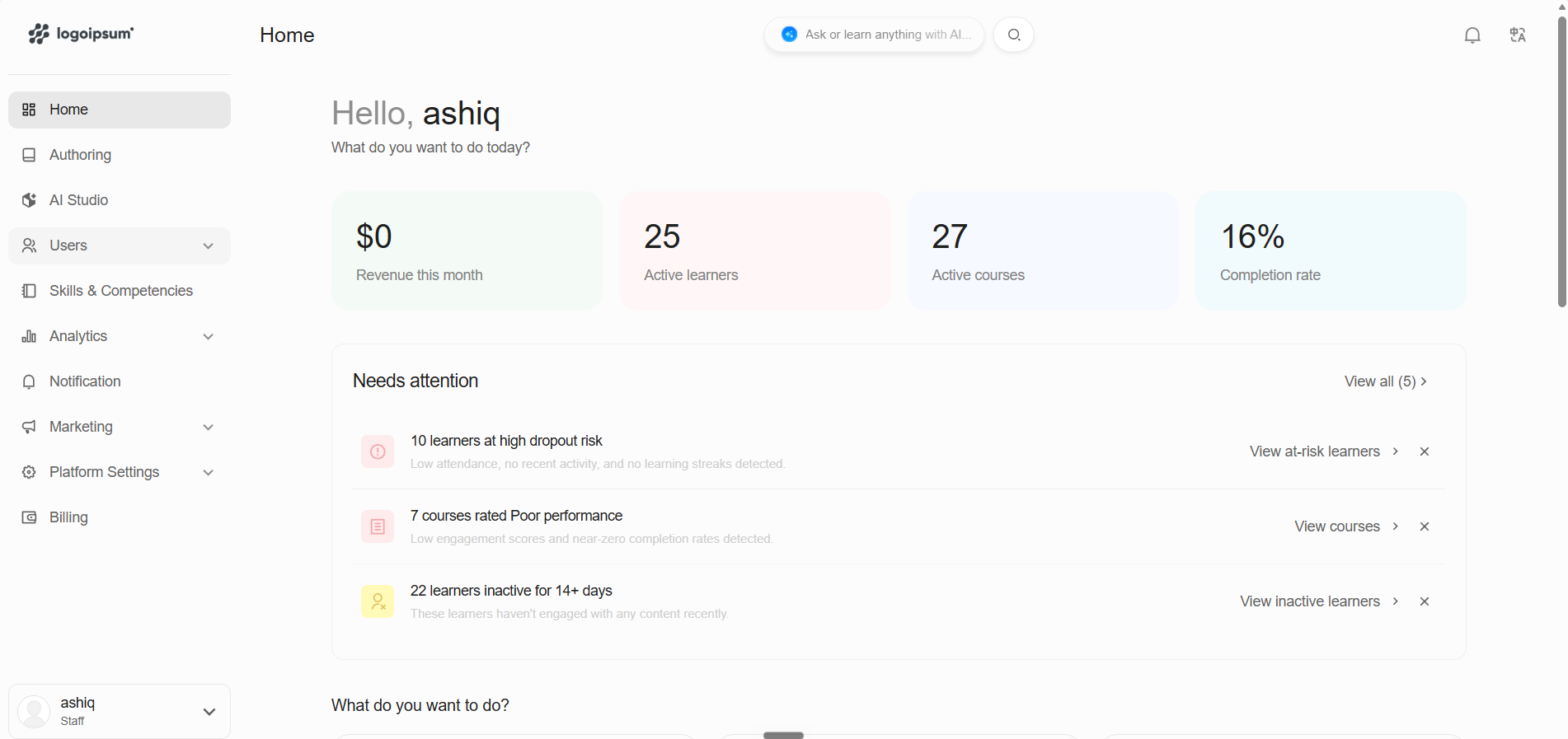
Blend-ed is an AI-powered learning platform built on Open edX for organizations that deliver training as a business. It combines course delivery, cohort management, certificates, e-commerce and a bundled AI suite (AI Course Creator, AI Tutor, Knowledge Assistant, Admin Agent) in one system, with multi-organization delivery for serving separate clients.
Why it fits Saudi buyers
Arabic and RTL are listed platform capabilities, alongside multilingual delivery and mobile access (official vendor documentation). Deployment architecture is scoped per project, so apply the standard proof request: cloud regions for production data, backups, logs and AI processing, named in the contract.
Key capabilities
- Cohort-based, instructor-led, self-paced and blended delivery with certificates and structured client programs
- AI Course Creator for drafting courses from existing materials, with AI Tutor and admin automation in both plans; drafts are edited and published in the Open edX-based authoring environment, so request an export-format demonstration if you need portability
- Multi-organization delivery for client-separated training (multi-tenant LMS guide), with SCORM, LTI and H5P content support
- E-commerce with payment gateway integration and unlimited registered users on the Core plan
Pricing
Quote-based across Core and Enterprise tiers; the plan structure is public on the pricing page but amounts are not (official vendor documentation). Core includes the full AI suite, unlimited registered users, web and progressive web app access, and no setup cost; native iOS and Android apps, SSO and API access sit on Enterprise.
Pros
- Delivery models match how training businesses run: multiple clients, cohorts, certificates and paid programs
- AI suite bundled in both tiers rather than licensed separately
- Unlimited registered users at entry level suits academies with large learner pools
Limitations
- No public pricing; budgeting requires a quote
- Native mobile apps, SSO and APIs require the Enterprise tier
- More platform than simple internal course hosting needs; configuration effort scales with ambition
Verdict
Our editorial recommendation for organizations delivering certified training to external clients or cohorts. Choose it when multi-client operations, structured programs and bundled AI matter together; avoid it when you only need to host a few static internal courses.
Sources checked
product page, pricing and feature table.
2. LearnWorlds
Best for
Learning businesses and training providers selling and running branded programs, from course commerce to multi-client delivery.
Overview
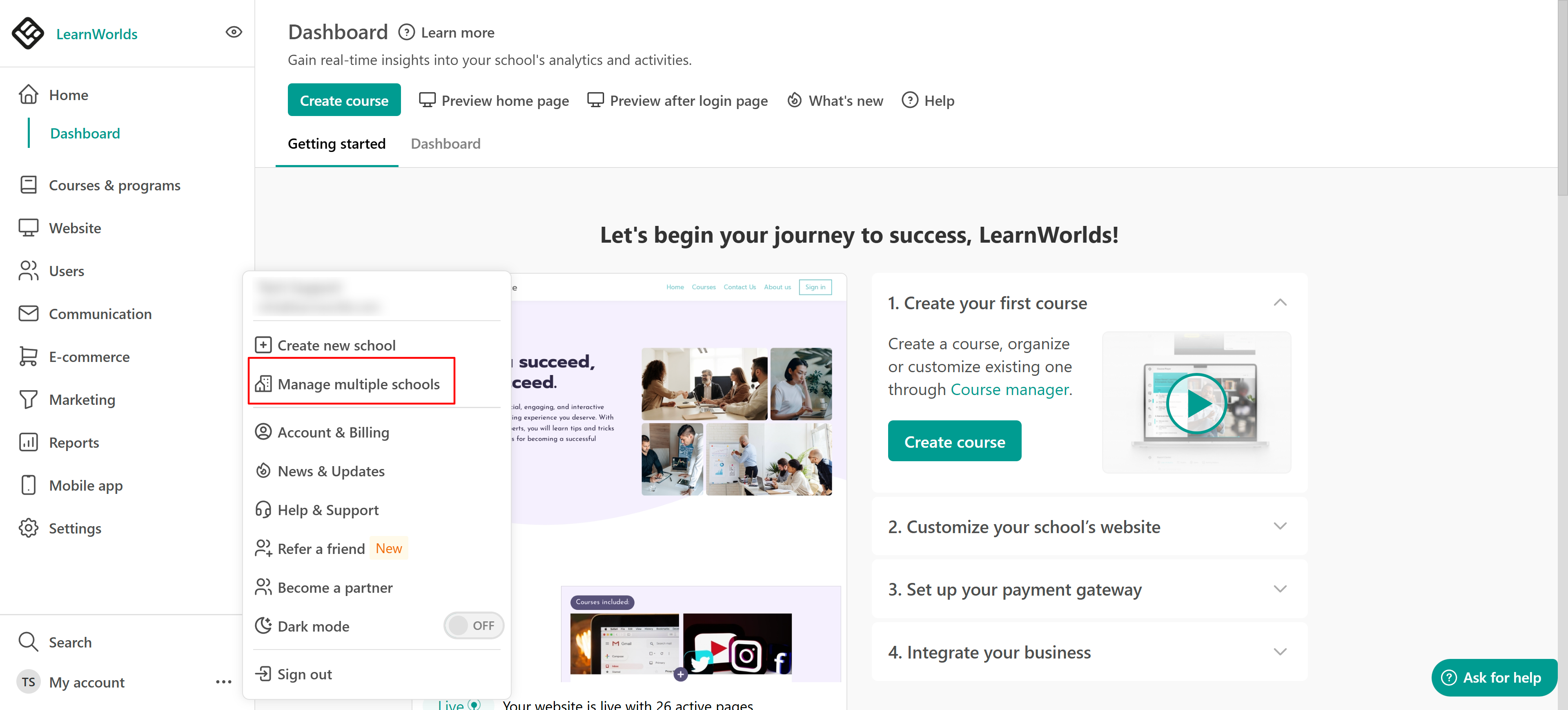
LearnWorlds is a learning-business platform for building, marketing and selling training, with an interactive learner experience, assessments, certificates and a website builder. Beyond single-academy course selling, it markets capabilities for training providers, including a Multiple Schools model with separate client academies managed from one dashboard and content clone-and-sync between them (official vendor documentation).
Why it fits Saudi buyers
Arabic is among the supported languages (official vendor documentation); RTL depth is not publicly confirmed, so run the Arabic demonstration script from this guide before contracting. Multiple Schools differs from single-instance multi-tenant architectures; confirm centralized administration, client isolation and reporting against your operating model.
Key capabilities
- Native e-commerce: payments, subscriptions, bundles, coupons and affiliate marketing
- Multiple Schools with clone-and-sync for running programs across client academies
- Interactive video, assessments, certificates and white-label branding on higher tiers
- AI assistant for outlines, content and quiz generation
Pricing
Publicly published, uncommon in this list: Starter USD 29 per month (USD 24 monthly equivalent billed annually; includes a per-course-sale fee), Pro Trainer USD 99 (USD 79 annually), Learning Center USD 299 (USD 249 annually), with custom high-volume tiers. Each client school is a separately provisioned academy and may require additional subscription costs, and cross-school synchronization and cloning can depend on the selected plan or add-on, so compare total multi-school cost rather than the headline single-school price. The USD 29 entry price does not represent a realistic multi-client deployment cost.
Pros
- Real public pricing with a low single-school entry point
- Strong selling toolkit plus a documented multi-client model for training providers
- Fast setup without implementation projects
Limitations
- Multi-school and white-label costs scale per school and per plan; get the full multi-school quote
- Cohort, ILT and compliance operations are lighter than training-operations platforms
- RTL depth is not publicly confirmed
Verdict
Worth shortlisting for course-selling businesses and training providers that want transparent single-school pricing and a documented multi-client model. Avoid it when you need deep ILT operations or contract-grade client isolation without per-school cost growth.
Sources checked
training-provider solution page, Multiple Schools dashboard documentation, content clone-and-sync, pricing page.
3. LearnUpon
Best for
Organizations training several audiences at once through separate branded portals.
Overview
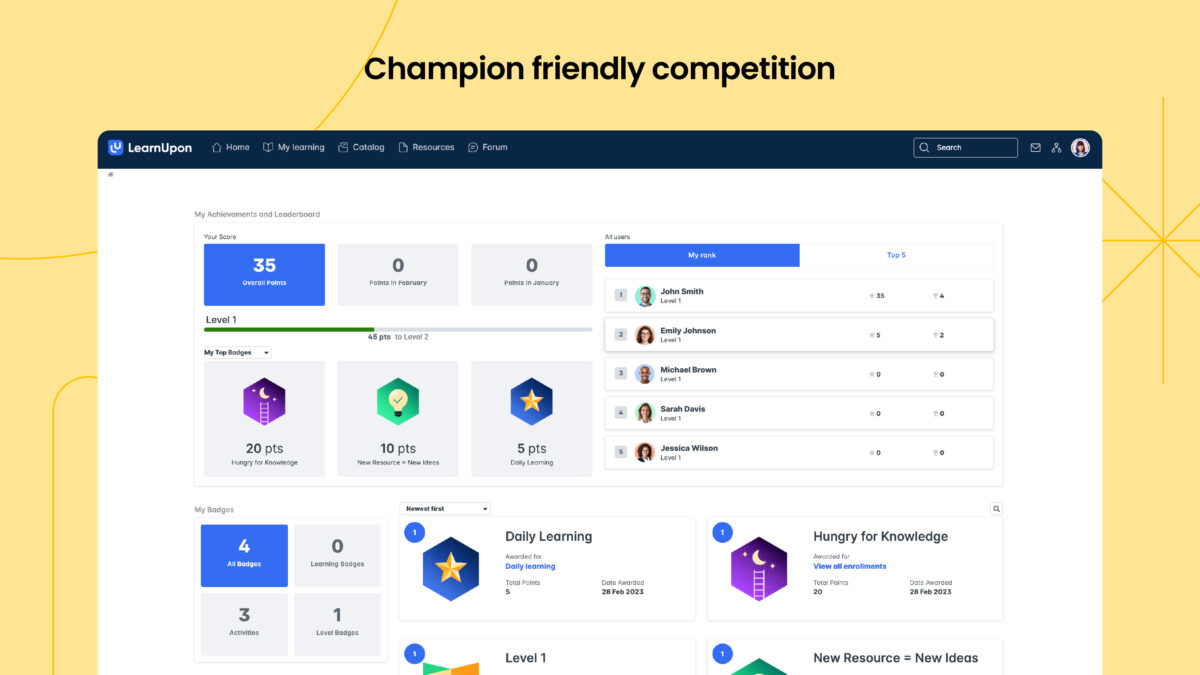
LearnUpon is a multi-portal LMS built around Learning Portals: a top-level portal with sub-portals, each carrying its own branding, URL, language, admins and content. It is widely used for customer, partner and employee training run side by side, with dependable reporting and integrations (official vendor documentation).
Why it fits Saudi buyers
LearnUpon documents 20+ interface languages with per-portal language defaults (official vendor documentation). Arabic-specific interface support and RTL behavior were not explicitly documented in the public sources we checked, so request the Arabic demonstration before shortlisting it for Arabic-first audiences.
Key capabilities
- Multi-portal architecture for client-separated or audience-separated delivery
- Certification and recertification management, ILT and live learning with Zoom, Teams and Meet
- E-commerce for courses, bundles and bulk purchases via Stripe or PayPal
- Automation for enrollments and recertification; generative AI is lighter than AI-native platforms
Pricing
Custom quote; no public starting price when checked.
Pros
- Clean multi-audience separation without custom development
- Mature reporting, certification and ILT administration
- E-commerce built for external training delivery
Limitations
- No public pricing
- Generative AI capabilities are lighter than AI-native platforms
- Arabic interface support not explicitly documented in public sources
Verdict
Worth shortlisting when separate branded portals per client or audience is your defining requirement and the Arabic demonstration checks out.
Sources checked
customer training solution, portal language settings, languages announcement, ILT documentation, e-commerce documentation.
4. Absorb LMS
Best for
Extended enterprise training that combines employees, partners and customers with compliance depth.
Overview
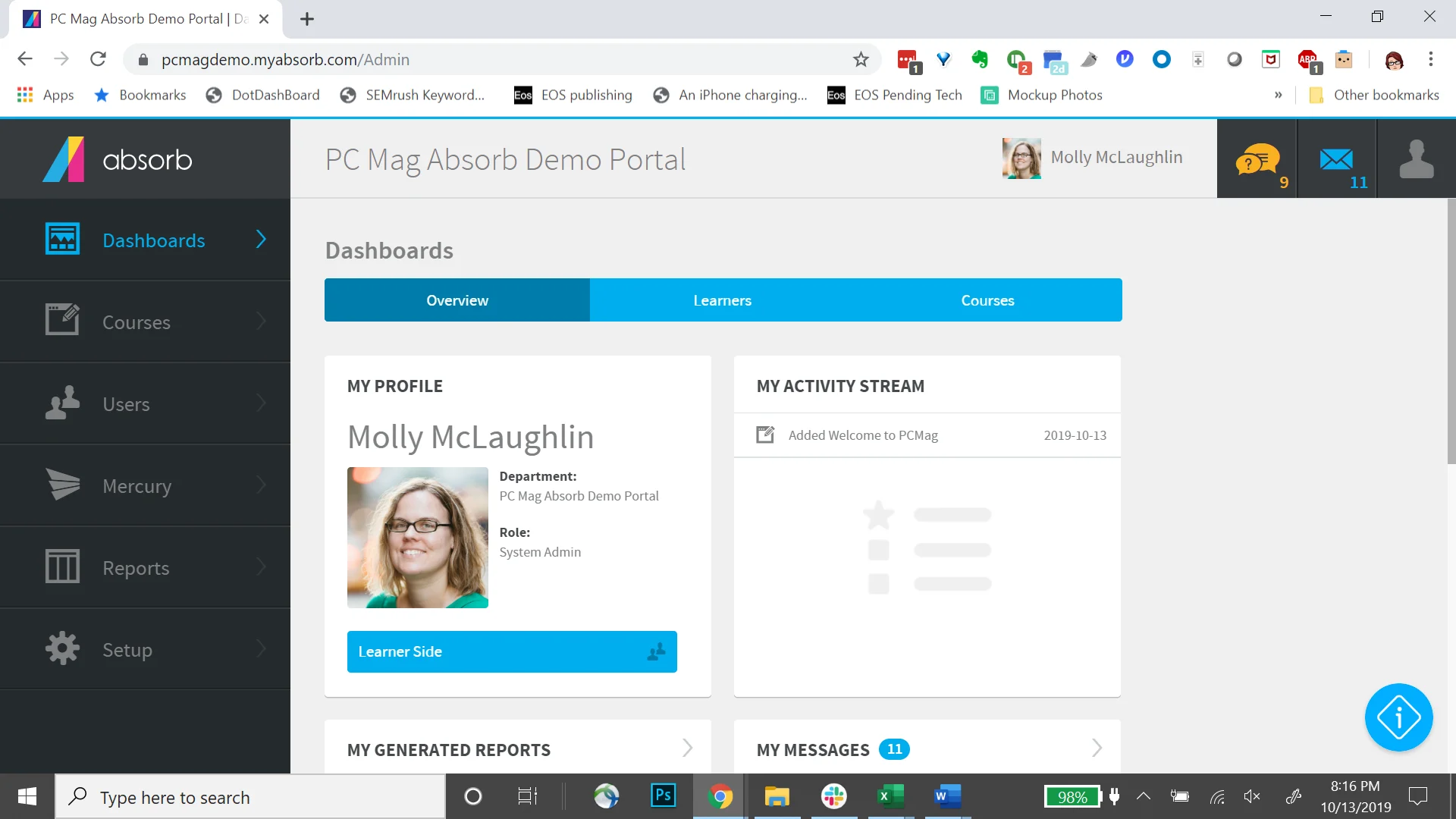
Absorb is an established enterprise LMS covering internal and external audiences, with branded portals, e-commerce and certification. Its AI lineup includes Create AI for content generation, Absorb Skills for upskilling paths and an AI Coach, alongside admin automation (official vendor documentation).
Why it fits Saudi buyers
Arabic is among the supported interface languages (official vendor documentation); RTL behavior is not explicitly documented publicly, so include it in the Arabic demonstration. Create and Skills are marketed as distinct products in Absorb's lineup, so have your quote itemize the AI products included.
Key capabilities
- Extended enterprise delivery for employees, partners and customers in one platform
- Compliance training, certifications and observation checklists
- Create AI authoring, Absorb Skills and AI Coach
- Integrated e-commerce shopping cart standard with the platform
Pricing
Custom quote; no public starting price when checked.
Pros
- Balanced strength across internal compliance and external delivery
- Meaningful AI toolset across authoring, skills and learner support
- Mature administration and reporting
Limitations
- No public pricing, and AI products are packaged separately from the core LMS
- RTL depth needs demonstration
- Heavier implementation than SMB tools
Verdict
Worth shortlisting when one platform must serve employees, partners and customers with compliance rigor, and your quote itemizes the AI products you actually intend to use.
Sources checked
LMS product page, extended enterprise solution, Absorb site AI overview.
5. Docebo
Best for
Enterprises automating large learning operations across internal and extended audiences.
Overview
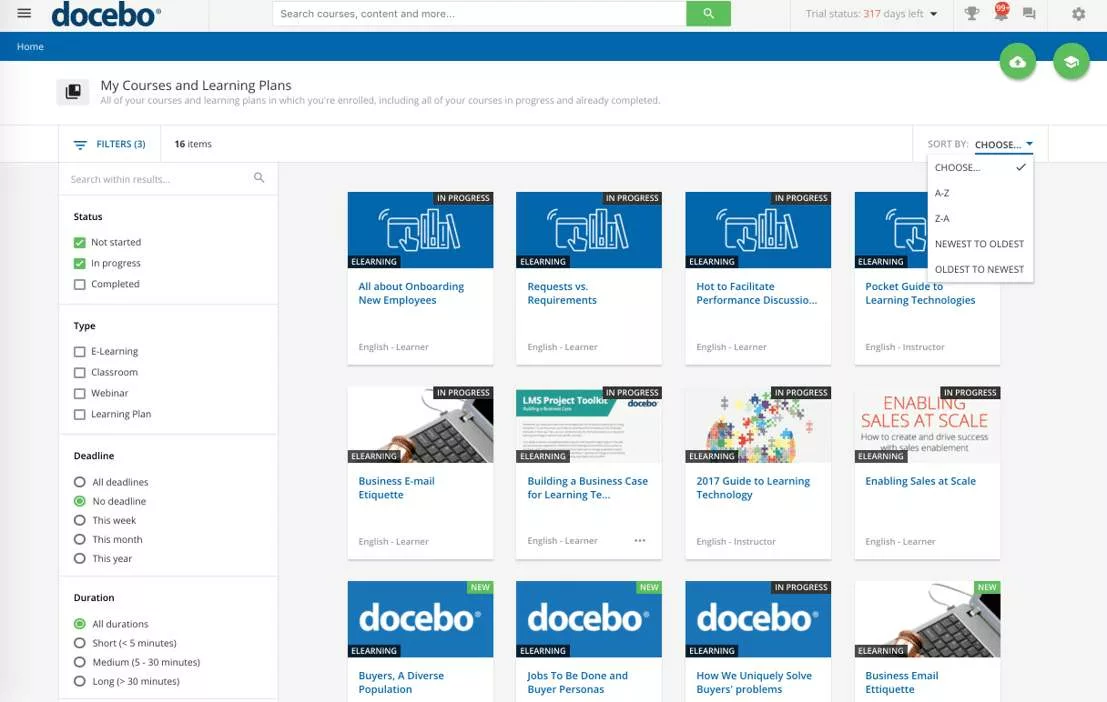
Docebo is an enterprise learning platform known for AI-driven content discovery, personalization and workflow automation, with multi-portal extended enterprise delivery, social learning and a large integration ecosystem. It suits organizations industrializing learning delivery across many audiences and geographies.
Why it fits Saudi buyers
Docebo lists Arabic as a supported platform language, but Arabic is not included in the published Creator authoring language list (official vendor documentation, checked 2 July 2026). Buyers should therefore test learner, administrator and authoring workflows separately. Cloud regions exist in the wider Middle East; tenant placement is contractual, so apply the standard hosting proof request.
Key capabilities
- AI discovery, recommendations and generative workflows
- Multi-portal extended enterprise with e-commerce
- Broad integrations: CRM, HRIS, identity, webinars
- Automation across enrollment and administration
Pricing
Custom quote; no public starting price when checked.
Pros
- Mature AI-led automation at enterprise scale
- Strong extended enterprise and commerce options
- Deep integration ecosystem
Limitations
- Arabic is absent from the published Creator authoring language list
- Modules and services raise total cost quickly
- Implementation complexity is significant
Verdict
Worth shortlisting when enterprise-scale automation and extended enterprise delivery lead your requirements and Arabic authoring is either out of scope or proven in your acceptance test.
Sources checked
supported languages and Creator language list, platform overview.
6. Thought Industries
Best for
Enterprise customer education and B2B training businesses monetizing learning at scale, where Arabic is not yet a hard requirement or can be proven in evaluation.
Overview
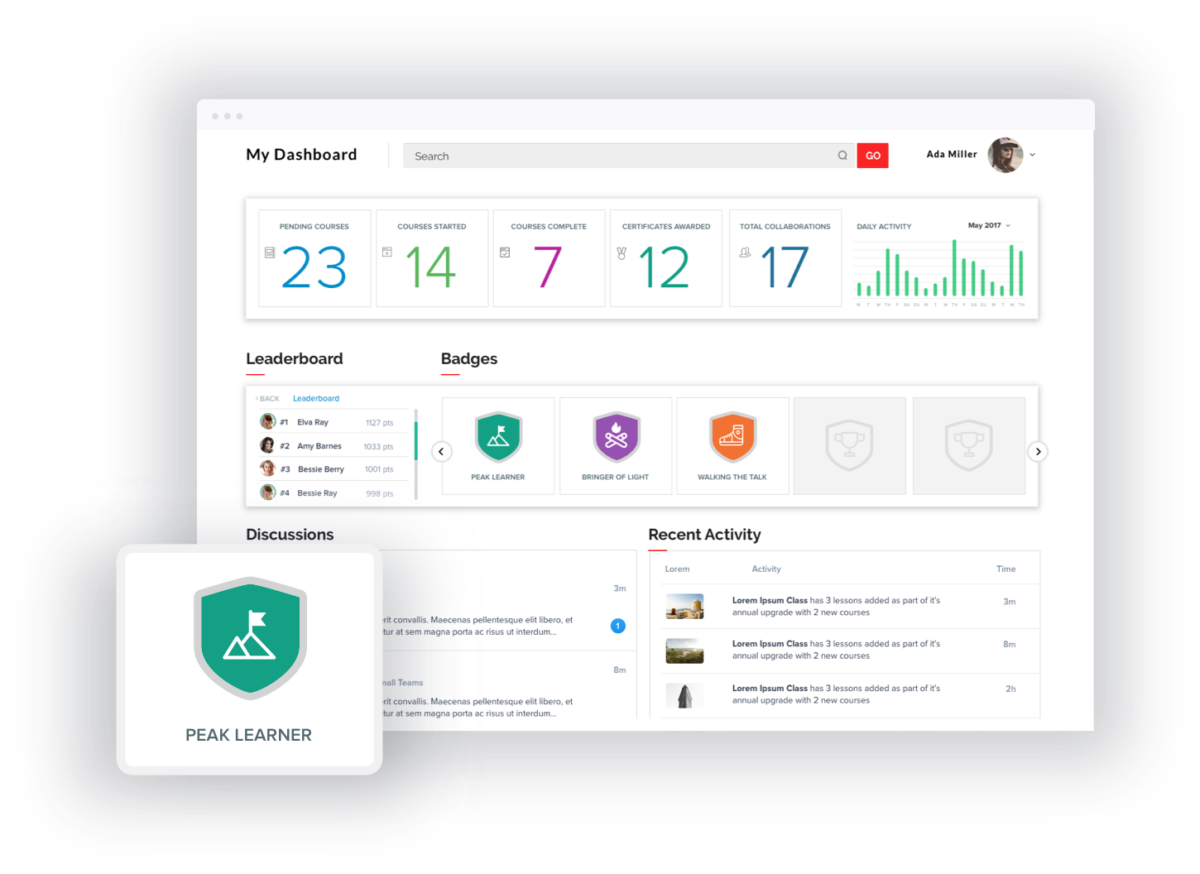
Thought Industries is an enterprise external-learning platform whose Panorama multi-tenancy gives each client, partner or department a branded learning environment, with native authoring, e-commerce and learning analytics for organizations where education is a product or a revenue line (official vendor documentation).
Why it sits here
Its external-training architecture is among the stronger options in this list, but its native multilingual documentation lists seven default platform languages (English, German, Spanish, French, Japanese, Portuguese, Chinese), with additional languages handled as custom definitions or premium translation integrations. Arabic delivery would therefore rely on custom configuration, which we treat as a gating requirement: see a working Arabic demonstration across learner, admin, checkout and authoring workflows before investing in an evaluation.
Key capabilities
- Panorama multi-tenancy for branded client environments at scale
- Native authoring plus monetization: e-commerce, subscriptions, licensing models
- Learner analytics aimed at education-as-a-business metrics
- Enterprise integrations and APIs
Pricing
Custom quote; no public starting price when checked.
Pros
- Purpose-built for external and monetized learning at enterprise scale
- Strong multi-tenant branding and segmentation
- Deep commerce and licensing options
Limitations
- Arabic is not a default platform language; delivery depends on custom configuration
- Enterprise pricing and implementation weight
- No published Saudi or regional presence
Verdict
Thought Industries is architecturally strong for enterprise external learning, but Saudi buyers should treat Arabic support as a gating requirement rather than a secondary feature. Avoid it when Arabic-first delivery is needed now.
Sources checked
Panorama, multi-tenancy, native multilingual capabilities.
7. Classera
Best for
Saudi schools, universities and government education programs wanting an Arabic-native ecosystem.
Overview
Classera is an AI-enabled learning ecosystem spanning LMS, education ERP, engagement tools and a marketplace, widely deployed across Saudi education. Its AI features focus on teaching support: automated academic responses, video enrichment, personalized exams and grading assistance (official vendor documentation).
Why it fits Saudi buyers
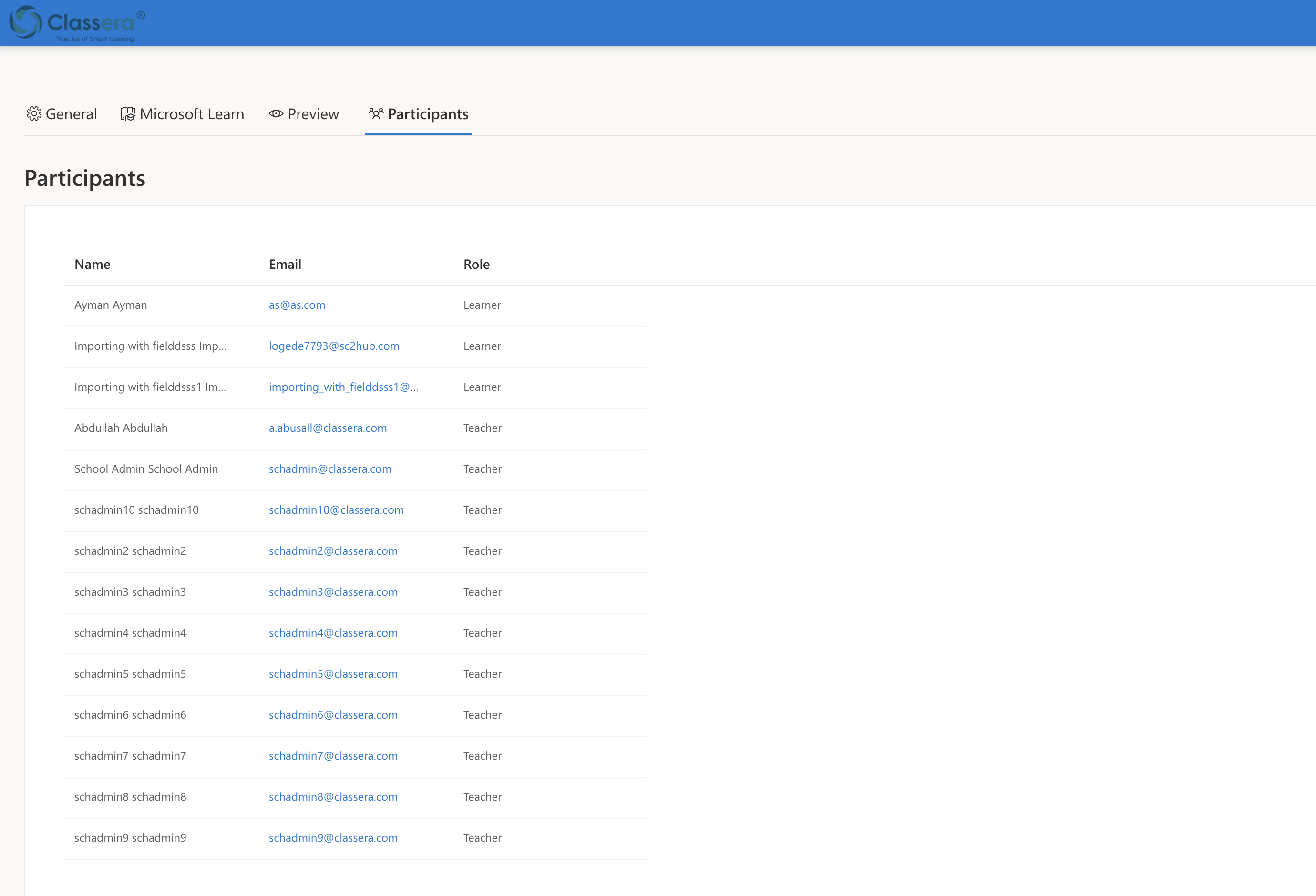
Arabic-native design with RTL across learner, teacher and admin experiences is its identity, and the vendor publishes Saudi and regional deployment references (official vendor documentation). Hosting locations and data-processing details are not published, so apply the standard hosting proof request.
Key capabilities
- Arabic-first learner, teacher and admin experiences
- Education ERP, engagement and community features beyond the LMS
- AI teaching aids: automated responses, video enrichment, personalized assessment
- Marketplace distribution within the Kingdom
Pricing
Custom quote; no public starting price when checked.
Pros
- Established Saudi education presence with published regional deployments
- Arabic-native rather than Arabic-translated
- Broad ecosystem for institutions
Limitations
- Corporate and commercial training workflows are thinner than education features
- No public pricing
- Public hosting and integration documentation is limited
Verdict
Our editorial recommendation for education institutions and ministry programs that must be Arabic-native end to end and value local presence over corporate training depth.
Sources checked
Classera site, Classera LMS product page.
8. Disprz
Best for
Enterprises building measurable workforce skills across frontline and knowledge workers.
Overview
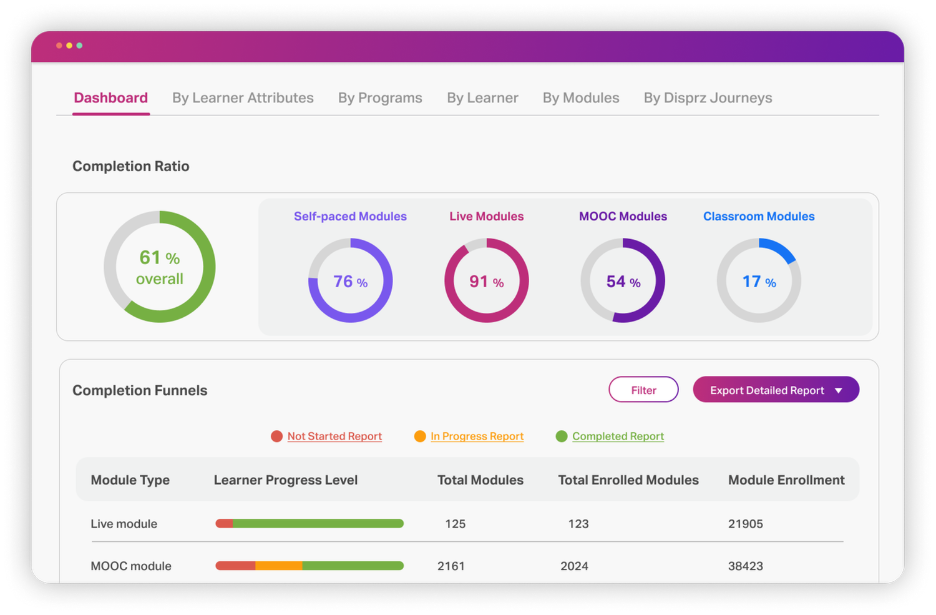
Disprz combines LMS, LXP and skills intelligence with a mobile-first delivery model. Role-linked skill frameworks, gap analysis and readiness dashboards connect learning to capability, and AI supports recommendations and authoring.
Why it fits Saudi buyers
Disprz publishes GCC-focused resources and names Saudi and regional customers, including a published ROSHN case study (official vendor documentation; outcome claims not independently verified). Arabic support is vendor-documented; include admin interfaces in the Arabic demonstration.
Key capabilities
- Skills taxonomies, role mapping and gap analytics
- Mobile-first and frontline-friendly delivery
- AI-assisted authoring and recommendations
- Enterprise integrations (HRIS, collaboration, webinar)
Pricing
Custom quote; no public starting price when checked.
Pros
- Skills-first architecture rather than completion tracking
- Named GCC enterprise customers with published case studies
- Good fit for distributed and frontline workforces
Limitations
- Not designed for commercial academies or client-separated training
- No public pricing
- Admin-side Arabic depth needs demonstration
Verdict
Worth shortlisting when the goal is workforce capability measured in skills rather than course completions and your audiences are internal. Avoid it when you sell certified training to external clients.
Sources checked
Disprz platform, ROSHN case study.
9. Oreed
Best for
Saudi training providers wanting a local, Arabic-native platform for courses, events and certification.
Overview
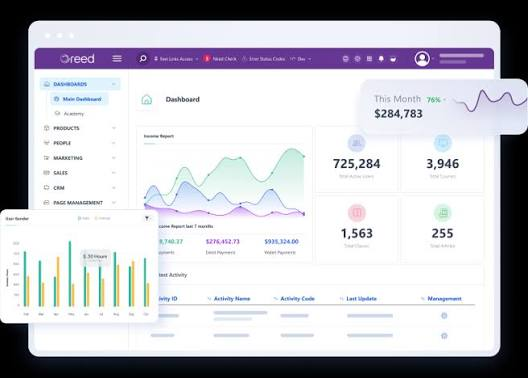
Oreed is a Saudi-built learning platform combining course management, certification, event management and community learning in a fully Arabic system, with a marketplace connecting local trainers and learners. AI course templates and adaptive assessments are described in vendor materials (official vendor documentation; depth not publicly evidenced).
Why it fits Saudi buyers
Saudi origin and Arabic-native design are the proposition. Public enterprise documentation is thin, so request hosting, security and integration specifics in writing early, using the proof requests above.
Key capabilities
- Arabic-native course delivery and certification management
- Event and community learning alongside courses
- Local marketplace distribution
- AI course templates and adaptive assessments (vendor-described)
Pricing
Custom quote; no public starting price when checked.
Pros
- Saudi-built with Arabic-native experience end to end
- Certification plus events suits local training providers
- Local market alignment and support
Limitations
- Limited public documentation on enterprise features, integrations and security
- AI depth is vendor-described rather than demonstrated publicly
- Multi-client architecture not publicly evidenced
Verdict
Worth shortlisting when local alignment and Arabic-native delivery top your list and the vendor evidences enterprise details in procurement.
Sources checked
Oreed site (the primary public source available; claims labeled accordingly).
10. Moodle (with AI integrations)
Best for
Organizations that want full control of hosting, architecture and cost through open source.
Overview
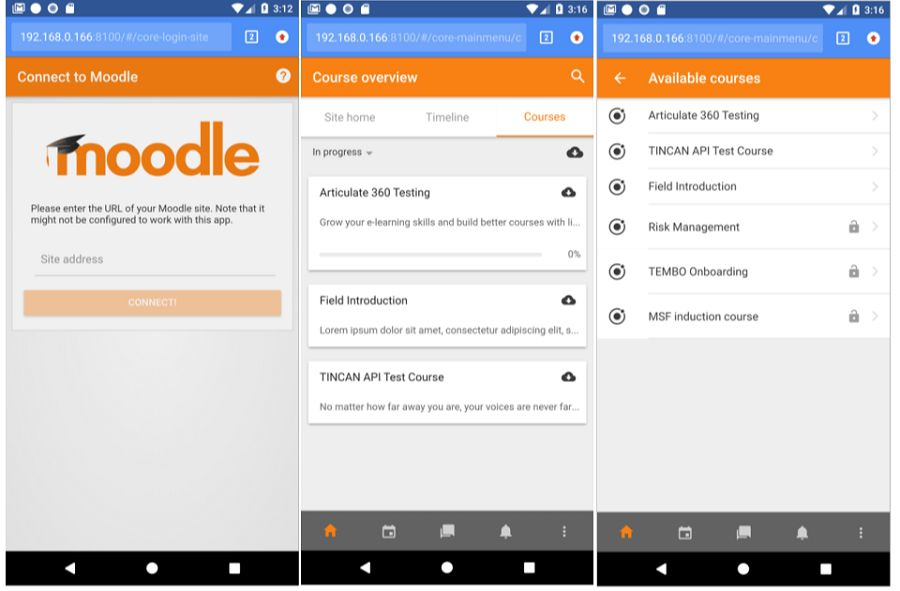
Moodle is one of the most widely deployed open-source LMS platforms, with a long-standing presence in Saudi universities. Since version 4.5 its AI subsystem connects providers (OpenAI, Azure, Gemini, AWS Bedrock, or self-hosted models) to placements like the text editor and course assistant (official documentation). Capability depends on what you assemble.
Why it fits Saudi buyers
Arabic language packs and RTL are mature (official documentation), and self-hosting gives buyers significant control over hosting location and architecture. Complete residency still depends on every connected service, plugin, backup system, analytics tool and AI provider. FutureX integration would be your implementation's responsibility with a partner.
Key capabilities
- Full LMS delivery: courses, cohorts, ILT via plugins, certificates, competencies
- AI subsystem supporting commercial and self-hosted models, off by default
- Hosting anywhere, including in-Kingdom infrastructure
- Large partner and plugin ecosystem
Pricing
No license fee. Total cost sits in hosting, implementation, integrations, support, security, upgrades and AI services; open source does not mean free.
Pros
- Maximum control over data, architecture and cost allocation
- Mature Arabic and RTL support
- No vendor lock-in
Limitations
- You own assembly, governance, security and maintenance, or pay a partner to
- AI features require configuration and are not equivalent to a managed AI LMS out of the box
- Total cost of ownership is routinely underestimated
Verdict
Choose Moodle when you have, or will hire, real technical capability and hosting control matters more than vendor-managed convenience; avoid it when nobody in your organization will own the stack.
Sources checked
Moodle AI subsystem developer documentation, Moodle AI subsystem admin documentation.
Other platforms considered
SAP SuccessFactors Learning and Cornerstone are capable enterprise workforce systems, best suited to organizations standardizing on those HR suites for internal L&D rather than external or commercial training; SAP documents Arabic with Hijri calendar support and operates Riyadh cloud capacity (tenant hosting varies by contract). iSpring Learn and TalentLMS are solid SMB tools with transparent pricing but limited multi-client and governance depth for these buyers. Lumofy, a GCC skills-intelligence platform, is worth shortlisting for competency analysis alongside an LMS rather than as one.
How should you evaluate Arabic and RTL support in an LMS?
"Arabic supported" on a vendor page can mean anything from a fully mirrored experience to a translated learner menu over an English admin console. We did not find publicly accessible independent Arabic AI output benchmarks for these platforms as of 2 July 2026, so the evaluation burden sits with you. Require every shortlisted vendor to demonstrate, with your own sample content:
- Arabic learner interface: menus, buttons, progress elements and player controls
- Arabic administrator interface: can your admins actually work in Arabic, or English only?
- Arabic authoring: create and edit a lesson in Arabic, not just display one
- Mixed Arabic-English content: numerals, dates, punctuation and alignment in one paragraph
- Mobile RTL: rendering and navigation direction on iOS and Android
- Certificates: Arabic names, Hijri or Gregorian dates, layout integrity
- Notifications and emails: RTL rendering in real inboxes
- Search: does Arabic search return your Arabic content?
- Reports: Arabic field values, exports and column ordering
- AI course generation: grammar, register, punctuation and hallucination checks by a native speaker
- AI tutor responses: accuracy and tone in Arabic against your course content
- Accessibility: screen-reader behavior with RTL layouts
Use the same prompt and the same source document with every vendor so the outputs are comparable. A reusable benchmark: ask each vendor to generate a 30-minute Arabic compliance course for healthcare employees in Saudi Arabia with three learning objectives, one scenario assessment, a five-question quiz, an English translation and a completion certificate, then score the results against this checklist. This article makes no tested claims about any platform's Arabic AI output.
Which LMS fits your organization type?
- Professional training companies: Blend-ed is our editorial recommendation; LearnUpon when portal separation dominates; LearnWorlds for commerce-led models. Smaller providers: see our guide to LMS options for small Saudi training providers
- Commercial academies and course businesses: LearnWorlds or Blend-ed, depending on whether selling courses or running structured cohort programs defines your model
- Enterprises (workforce training): Disprz for skills-led development; Docebo or Absorb for automation and extended enterprise
- Saudi education institutions: Classera, or Moodle with a capable local partner
- External customer and partner learning: Absorb, Docebo or Thought Industries (Arabic gating applies); Blend-ed where certified client training is the model
- Government and regulated organizations: shortlist against NCA controls and hosting requirements first; Moodle self-hosted and vendors that will contract regional hosting are the usual finalists
- Open-source deployments: Moodle with AI integrations
Who should not choose Blend-ed
Honest qualification saves everyone time. Blend-ed is probably not your platform if you only need basic static internal course hosting, want learning fully embedded inside an existing SAP HR environment, want a completely self-managed open-source stack, do not need multi-client delivery, do not need AI-assisted creation or learner support, or do not need certificates, cohorts or structured programs. A simpler or more specialized tool will serve you better in those cases.
Saudi AI LMS procurement checklist
Copy these into your RFP or demo script. Each is phrased to produce evidence, not a yes:
- State which license our organization or programs require, and through which body.
- Provide a FutureX integration scope: supported data fields, delivery responsibility, implementation estimate and evidence of any previous FutureX connection.
- Name the cloud regions used for production data, backups, logs, disaster recovery and AI processing, and include them in the contract. State Saudi or regional hosting options and their cost.
- State the legal basis and safeguards for any cross-border transfers under PDPL, and who prepares the transfer risk assessment.
- List where AI prompts, uploaded documents and AI tutor conversations are processed, and name the AI subprocessors.
- Confirm in writing whether customer data trains shared AI models and how we disable it.
- Show how AI-generated content and AI tutor interactions are logged, and export the audit trail.
- Demonstrate the learner, administrator, authoring, reporting, certificate and mobile interfaces in Arabic using our sample content.
- Generate a course in Arabic live, and let our native speaker review it.
- Demonstrate how client organizations are separated, and price each additional portal, tenant or school.
- Walk through certificate issuance, branding, verification and audit.
- Run an ILT session end to end at our volumes: scheduling, attendance, completion.
- Show e-commerce checkout with SAR pricing and VAT handling.
- Itemize what implementation includes, and everything it excludes.
- State the contract minimum, renewal increase policy and support tiers.
- Demonstrate a full data export: formats, scope, cost and timeline at exit.
Frequently asked questions
What is the best AI LMS in Saudi Arabia?
It depends on your delivery model. Blend-ed, LearnWorlds and LearnUpon form a strong shortlist for professional training companies; Absorb, Docebo and Thought Industries for customer and partner education; Classera for Saudi education; Disprz for enterprise skills; Oreed for Arabic-native delivery; Moodle for open-source control.
Which LMS is best for professional training companies?
Blend-ed is our editorial recommendation: multi-client delivery, cohorts, instructor-led sessions, certificates, e-commerce and a bundled AI suite, with unlimited registered users on its entry plan. LearnUpon suits providers that need separate branded portals; LearnWorlds suits commerce-led training businesses.
Do online training providers need a license in Saudi Arabia?
If you deliver e-learning in the Kingdom and grant certificates of completion, Saudi e-learning regulations apply. From May 2026, private training providers obtain program licenses through TVTC after meeting NELC technical-integration requirements via FutureX. Paths differ by organization and program type; confirm yours with NELC and TVTC.
Must an LMS integrate with FutureX?
Entities subject to Saudi e-learning licensing undertake technical integration and data sharing with FutureX under NELC's conditions. Integration is separate from program licensing and vendor accreditation. We did not find publicly accessible documentation confirming a productized FutureX integration for any platform here as of 2 July 2026, so request a written integration scope.
Does PDPL require learner data to stay in Saudi Arabia?
Not universally. PDPL permits cross-border processing in defined circumstances, typically requiring a legal basis, safeguards such as SDAIA standard contractual clauses or binding common rules and, in applicable cases, a transfer risk assessment. Government and regulated-sector contracts may impose stricter localization requirements than PDPL itself.
How much does an AI LMS cost in Saudi Arabia?
Public entry points start at USD 29 per month (LearnWorlds Starter, single school). Most enterprise platforms in this guide use custom pricing. Some third-party procurement sources report five-figure annual contracts for specific vendors, but actual cost depends on users, modules, implementation, hosting and support, so request itemized quotes on identical scenarios.
How should buyers test Arabic and RTL support?
Run the same structured demo on every shortlisted platform: learner, admin, authoring and mobile walkthroughs in Arabic, mixed Arabic-English content, certificates, emails, reports and search, plus a live AI generation task reviewed by a native Arabic speaker. Vendor language lists alone do not predict working RTL behavior.
Which platform is best for external customer or partner training?
Absorb and Docebo are strong extended enterprise options with documented Arabic interfaces; Thought Industries is architecturally strong but gated until Arabic delivery is demonstrated. Blend-ed is the alternative when the model is certified client training run by a training business.
Choosing well
Shortlist two or three platforms from the category that matches your delivery model, run the Arabic demonstration and the procurement questions above, and request itemized quotes on identical scenarios. That process, more than any ranking, prevents the expensive mistake. For evaluation structure, see our AI LMS buyer guide; for the market beyond the Kingdom, our comparison of AI LMS platforms globally.
Discuss your learner volume, client structure and Saudi deployment requirements.