
Key Takeaway
What is the difference between multi-tenant LMS and multi-instance LMS?
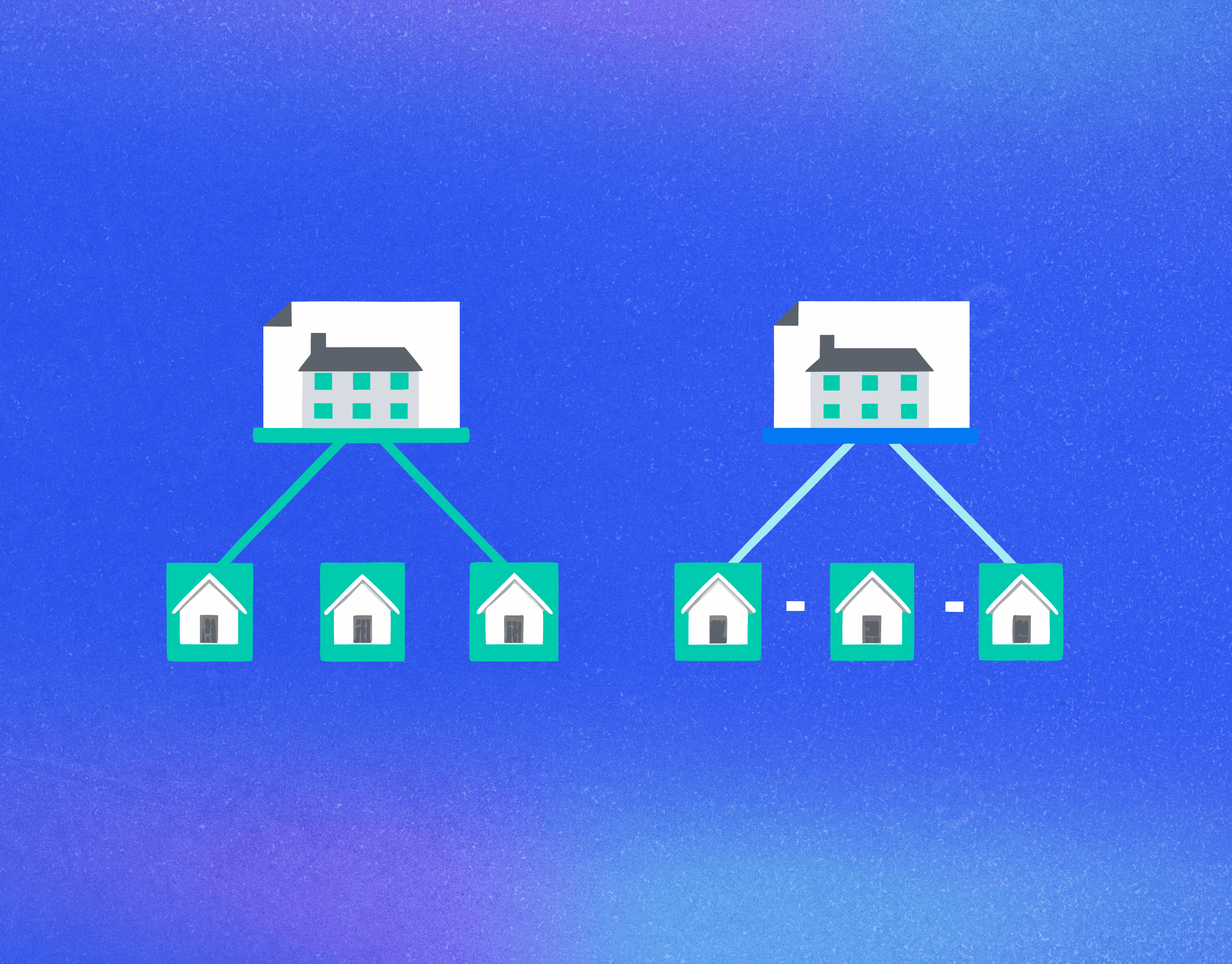
A multi-tenant LMS uses one system for multiple clients, while a multi-instance LMS uses a separate system for each client.
Which LMS architecture is easier to scale?
Multi-tenant LMS is easier to scale because you manage one system instead of multiple environments.
Why do multi-instance LMS setups become difficult over time?
Because every update, fix, and change has to be repeated across multiple systems, which increases effort as clients grow.
When do training companies start facing issues with their LMS setup?
Usually after scaling, when onboarding slows down, updates take longer, and reporting becomes harder to manage.
How do you know if your LMS architecture is the problem?
If operations like onboarding, updates, and reporting feel slow or repetitive, the issue is likely the architecture, not just the platform.
Which type of LMS is better for managing multiple clients efficiently?
Multi-tenant LMS platforms, such as Blend-ed, are designed to handle multi-client training at scale without increasing operational load.
Over the past few years, I've seen the same pattern repeat across training companies.
They start with a few clients. To keep things simple, they set up separate LMS environments for each one. At that stage, it works. Each client gets their own space, everything feels controlled, and there are no immediate problems.
Then growth happens.
More clients come in. More courses are added. Certifications, renewals, reporting, and updates start stacking up. What used to feel like a clean setup slowly turns into a system that is harder to manage. Updates take longer. Small changes have to be repeated across environments. Teams spend more time maintaining the platform than improving the learning experience.
This is usually the point where teams start asking a different question.
Not "which LMS should we use?"
But "how should this LMS be structured?"
That is where the difference between multi-tenant LMS and multi-instance LMS becomes important.
This guide is written from that point of view. Not just to explain what these terms mean, but to help you understand how they behave when your system grows, and what that means for your operations over time.
What "multi-instance LMS" actually means
A multi-instance LMS setup means that every client gets their own independent LMS environment.
Each instance has:
- Its own database
- Its own hosting setup
- Its own configuration and updates
In practice, this means you are running multiple LMS platforms in parallel.
This model is widely used in ecosystems like Open edX and Moodle, where deployments are often created per client. Many providers use tools like Tutor to spin up separate environments for each organization.
It is important to understand one thing clearly:
Multi-instance is not a different category from single-tenant. It is simply running many single-tenant systems at the same time.
This gives strong isolation, but it also creates operational complexity that increases with every new client.
What "multi-tenant LMS" actually means
A multi-tenant LMS operates on a single shared platform, where multiple clients (tenants) exist within the same system but remain logically separated.
Each tenant can have:
- Its own users
- Its own courses
- Its own branding
- Its own reporting
But all tenants share the same infrastructure, application layer, and upgrade cycle.
This is the core idea behind multi-tenancy as defined in enterprise software systems: a shared environment with controlled logical isolation.
If you want a deeper technical explanation of how this works, this guide on what is multi tenant LMS explains the architecture in more detail.
Where the confusion comes from
The confusion around LMS architecture does not come from the technology. It comes from how vendors describe it.
Terms like:
- Portals
- Sub-accounts
- Branches
- Microsites
are often used interchangeably.
In some platforms, these are just UI-level variations. In others, they represent deeper structural separation. Without clear definitions, buyers assume they are getting one type of architecture when they are actually getting another.
This is why many organizations realize only later that their setup does not scale the way they expected.
Single-tenant vs multi-tenant vs multi-instance
| Architecture | Structure | Isolation Type | Typical Use Case |
|---|---|---|---|
| Single-tenant | One LMS per organization | Physical | Internal corporate training |
| Multi-instance | Multiple single-tenant systems | Physical | High-compliance or custom client setups |
| Multi-tenant | One LMS with multiple tenants | Logical | Scalable external training businesses |
This distinction is important because the long-term operational impact of each model is very different.
Side-by-side comparison: 10 critical dimensions
| Dimension | Multi-tenant LMS | Multi-instance LMS |
|---|---|---|
| Data isolation | Logical | Physical |
| Cost per added client | Low | High |
| Onboarding speed | Fast | Slow |
| Customization depth | Moderate | High |
| Maintenance effort | Centralized | Distributed |
| Upgrade complexity | Low | High |
| Security patching | Single cycle | Per instance |
| Performance isolation | Managed | Fully isolated |
| Cross-client reporting | Simple | Complex |
| Scalability | High | Operationally limited |
This table reflects how these systems behave over time, not just how they are set up initially.
When multi-instance is genuinely the right choice
There are clear scenarios where multi-instance is the correct decision.
These include:
- Clients in defense, government, or highly regulated industries
- Strict requirements for physical data isolation
- Contracts that mandate dedicated infrastructure
- Deep customization requirements that differ significantly per client
- Data residency laws that require separate hosting environments
In these cases, the operational cost of multi-instance is justified by the compliance requirements.
Avoiding these scenarios in the discussion does not build trust. A good architecture decision acknowledges where each model fits.
When multi-tenant is the right choice
For most training companies delivering programs across multiple clients, multi-tenant architecture is more aligned with how the business scales.
It works best when:
- You are onboarding new clients regularly
- Client environments are structurally similar
- Your revenue depends on margin per client
- You need faster deployment cycles
- You want centralized reporting and analytics
- You are scaling beyond a small number of clients
There is also an important shift happening with AI capabilities.
In multi-tenant systems, AI features such as course generation, tutoring, and analytics can operate across all tenants without requiring separate configuration for each environment.
If you are evaluating platforms designed for this model, this comparison of the best multi tenant LMS platforms in 2026 provides a useful starting point.
The Open edX angle: what is actually shipping in 2026
Open edX is widely used for building large-scale learning platforms, but its architecture is often misunderstood in this context.
In practice, most Open edX deployments today follow a multi-instance model.
Common approaches:
1. Instance-per-client deployment
Each client is given a separate Tutor-based environment. This is the most common approach used by providers.
2. Microsites
These allow branding differences at the UI level but do not provide full tenant separation.
3. Multi-tenancy plugins
There are emerging solutions like tenant-based plugins, but they are not yet widely adopted at scale.
The result is that many organizations using Open edX end up managing multiple instances as they grow, which increases operational overhead.
This is one of the key reasons why architecture becomes a strategic decision, not just a technical one.
Hybrid architectures
In practice, not every organization fits into a single model.
A hybrid approach is becoming more common:
- Multi-tenant for most clients
- Dedicated environments for high-compliance clients
This allows organizations to balance scalability with specific client requirements.
It is a practical approach, especially for training companies working across different industries.
The hidden cost of multi-instance: maintenance math
This is the part that is often underestimated during the initial decision.
If maintaining one LMS instance takes a few hours per update cycle, the effort increases linearly with each additional client.
For example:
- 2 hours per update
- 30 clients
This results in 60 hours of maintenance work for a single update cycle.
This does not include:
- Testing
- Security patches
- Version upgrades
- Client-specific configurations
Over time, this becomes a continuous operational burden.
In a multi-tenant system, the same update is applied once across all tenants.
This difference is not immediately visible during setup, but it becomes significant as the system grows.
Decision framework: 6 questions to answer
To choose the right architecture, it helps to answer a few key questions in order:
- How many clients will you manage in the next 24 months?
- Do any clients require physical data isolation by regulation or contract?
- How different does each client environment need to be?
- Who is responsible for maintenance and updates?
- What is your revenue model — per client, per user, or per deployment?
- Do you need shared analytics or AI capabilities across clients?
These questions help align architecture with business needs rather than assumptions.
What this means if you are already on Open edX
If you are already running multiple Open edX instances, moving to a multi-tenant model is possible but requires planning.
What remains consistent:
- Course content structure
- Learning workflows
What changes:
- Deployment model
- User management
- Operational processes
Most organizations do not migrate everything at once. They transition gradually, often starting with new clients or new programs.
Conclusion
If you have worked with LMS setups for some time, you will recognize this pattern. The system itself is rarely the problem in the early stages.
Things start to break when scale comes in.
More clients, more environments, more updates, and more moving parts. What looked like a clean setup in the beginning slowly turns into something that needs constant attention. Not because the LMS is weak, but because the architecture was not designed for growth.
This is where the difference between multi-tenant and multi-instance becomes clear.
Multi-instance gives you control, but the effort increases with every client you add. Multi-tenant keeps that effort within a single system, making it easier to scale without multiplying operational work.
Most teams do not realize this early. They start seeing it when onboarding slows down, updates take longer, reporting becomes fragmented, and maintenance starts taking time away from actual training delivery.
At that point, the discussion shifts. It is no longer about features. It becomes about structure.
Platforms like Blend-ed are built around this shift. Not just as an LMS, but as a system designed for training companies managing multiple clients, certifications, and ongoing programs. The goal is not only to deliver learning, but to keep operations simple as the business grows.
If your current setup is starting to feel heavy, it is worth stepping back and looking at the architecture, not just the platform.
If you want to see how a multi-tenant setup would work for your use case, you can book a demo here.
The focus will be on your setup, your clients, and how the system can be structured around them.
FAQ
Is multi-instance the same as single-tenant?
No. Multi-instance means running multiple single-tenant LMS systems separately, each for a different client.
Can a multi-tenant LMS provide the same level of data security?
Yes in most cases. Multi-tenant systems use strong logical separation, but they do not provide physical isolation like separate infrastructure.
Is Open edX multi-tenant out of the box?
No. Most Open edX deployments are multi-instance, where each client runs on a separate setup.
Can I switch from multi-instance to multi-tenant later?
Yes, but it requires careful migration of users, courses, and learning data. Most teams transition gradually.
When does multi-instance become difficult to manage?
It becomes difficult when the number of clients increases and maintenance tasks like updates and fixes need to be repeated across systems.
When should I consider a hybrid LMS setup?
When most clients can share infrastructure, but a few require dedicated environments due to compliance or customization needs.
Are microsites the same as multi-tenancy?
No. Microsites usually handle branding differences, while multi-tenancy manages deeper separation of users, data, and reporting within the same system.