
Most learning platforms work perfectly fine.
Until they don't.
At first, everything feels manageable. One audience. One brand. One portal. Courses go live, learners enroll, reports get downloaded, and the LMS does exactly what it promised on the demo call.
Then the organization grows sideways.
A new region needs its own learning space.
A customer academy launches.
Partners ask for branded portals.
Internal teams want control without seeing everyone else's data.
Suddenly, the LMS is no longer just a tool for delivering courses. It becomes infrastructure. And that is usually the moment when teams start searching for something they did not think they would need so soon: a multi tenant LMS.
Key Takeaways
- If you train more than one audience, structure matters more than features. Multi-tenancy solves problems that appear only after learning starts to scale.
- Many LMSs claim multi-tenancy, but few are built around it. True multi-tenant platforms separate users, data, and control by design, not by workarounds.
- The cost of the wrong LMS shows up in friction, not invoices. Retrofitting structure later is far harder than choosing the right architecture upfront.
Why the Idea of Multi-Tenancy Keeps Coming Up Now
Learning is no longer a single internal function.
Modern organizations train employees, yes, but they also train customers, implementation partners, resellers, franchise owners, and sometimes entire external communities. Industry data around extended enterprise learning consistently shows that organizations with mature learning operations serve multiple audiences through the same platform, often under different brands, expectations, and levels of access.
A single-tenant LMS can stretch to accommodate this for a while. Teams add groups, create complex permission structures, duplicate courses, and manually enforce boundaries that the system was never designed to handle.
It works.
Until it becomes exhausting.
That exhaustion is what drives interest in multi-tenancy LMS architecture.
What a Multi Tenant LMS Actually Is
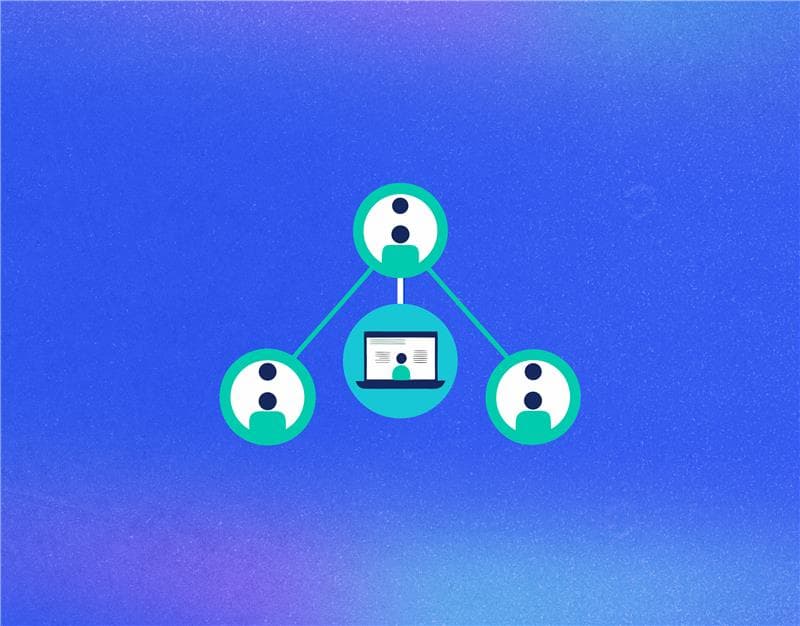
At its simplest, a multi tenancy LMS allows one learning platform to support multiple independent learning environments, commonly called tenants, under a single system.
Each tenant functions like its own LMS.
It can have its own users, its own administrators, its own branding, and its own reporting. Learners inside one tenant do not see learners, courses, or data from another tenant unless you explicitly allow it.
Behind the scenes, however, everything is still managed centrally. Updates, content libraries, platform configuration, and governance live at the top, while day-to-day operations can be delegated downward.
The key idea is separation without duplication.
Same engine.
Different learning worlds.
What Often Gets Confused with Multi-Tenancy, But Is Not the Same Thing
This distinction matters more than vendors like to admit.
Groups, departments, cohorts, or branches inside a single LMS instance are not the same as true multi-tenancy. They still exist inside one shared learning space, usually with shared branding, shared admin logic, and limited isolation.
A true multi tenant LMS creates boundaries that are structural, not cosmetic.
If tenant admins cannot operate independently, if branding cannot be isolated cleanly, or if reporting always rolls up in ways you cannot control, you are not looking at real multi-tenancy.
You are looking at organization features wearing architectural language.
Do You Actually Need a Multi Tenant LMS, or Is It Overkill?
This is the most important question, and it deserves an honest answer.
You probably need a multi-tenant LMS if learning inside your organization is no longer uniform. If different audiences require different experiences, different controls, or different ownership, then forcing everything into a single learning space will eventually slow you down.
This is especially true if you are:
- Running training programs for multiple clients
- Managing regional or departmental academies
- Launching customer or partner education initiatives
- Offering white-labeled learning experiences
- Scaling learning as a business, not just a function
In these scenarios, a white label multi tenant LMS is not a luxury. It is what prevents operational debt from piling up.
Multi-Tenancy LMS vs Single-Tenant LMS (Operational Comparison)
| Aspect | Single-Tenant LMS | Multi-Tenancy LMS |
|---|---|---|
| Core assumption | One organization, one learning structure | One platform serving multiple independent audiences |
| Learning flow | Inward-focused (employees only) | Outward and distributed (employees, customers, partners, regions) |
| Portal structure | One shared learning environment | Multiple isolated learning environments (tenants) |
| Administration model | Fully centralized admin control | Layered control with global admins and tenant admins |
| Branding flexibility | One brand across the platform | Separate branding, domains, and experience per tenant |
| User isolation | Logical separation using groups or roles | Structural separation between tenants |
| Operational effort at scale | Increases as audiences grow | Remains stable as new tenants are added |
| Typical use cases | Internal employee training | Training companies, customer education, partner or regional academies |
| Scalability behavior | Requires workarounds and duplication | Designed to absorb scale without restructuring |
| Best suited for | Simple, single-audience learning programs | Complex, multi-audience learning ecosystems |
The Real Advantages of a Multi-Tenancy LMS, Beyond Feature Lists
Teams do not move to multi-tenancy because of a checklist.
They move because of relief.
1) Relief from duplicating the same courses across portals.
2) Relief from manually managing permissions that should be automatic.
3) Relief from explaining to stakeholders why branding cannot be separated cleanly.
A multi-tenancy LMS allows learning teams to grow without rebuilding their LMS every time a new audience appears. It introduces structure that supports expansion rather than reacting to it.
Over time, the LMS stops feeling like a constraint and starts behaving like infrastructure.
Who Typically Uses Multi-Tenant Learning Management Systems Today
Multi-tenant LMS platforms are most commonly adopted when learning is no longer limited to a single internal audience.
As soon as training needs branch out by audience, region, or purpose, a shared LMS begins to feel restrictive. Multi-tenancy exists to solve that exact problem.
Here's who typically relies on it in practice.
Training Companies and Course Providers
Training companies often serve multiple clients at the same time, with each client expecting its own branded learning portal, learner data, and reporting.
A multi tenant LMS allows providers to create a separate tenant for every client while managing content, updates, and operations centrally. This avoids running and maintaining multiple LMS instances for the same business.
Employee Onboarding and Internal Enablement Teams
In larger organizations, onboarding and enablement are rarely uniform. They differ across departments, regions, or subsidiaries.
Multi-tenancy makes it possible to run separate internal learning environments under one platform, giving local teams control while maintaining global visibility, standards, and governance.
Sales Enablement Teams
Sales training is almost never one-size-fits-all.
Different regions, products, and partner types require different learning paths. With a multi-tenant LMS, organizations can create focused enablement portals without fragmenting their learning infrastructure or duplicating systems.
Customer Education Teams
Customer education works best when the learning experience feels like a natural extension of the product.
A white label multi tenant LMS allows companies to launch branded customer academies that are fully separate from internal training, while still being managed from the same platform.
Reskilling and Upskilling Program Owners
Upskilling initiatives often run in parallel across roles, skill tracks, and learner groups.
Multi-tenancy supports this by allowing multiple learning programs to operate independently under one LMS, without interfering with each other or requiring separate systems.
Partner and Franchise Enablement Teams
Partners and franchises need access to training, but not to internal systems or data.
Multi-tenancy creates clear boundaries by giving each partner or franchise their own learning space, while protecting internal workflows, content, and reporting structures.
Where This Shows Up Across Industries
Because these roles exist across sectors, the same pattern repeats across industries.
- Software and technology organizations use multi-tenant LMS platforms for customer education and partner enablement
- Manufacturing teams rely on them for regional onboarding, compliance, and role-based training
- Health and life sciences organizations adopt them to manage regulated learning across teams and external stakeholders
- Education and training providers use them to run multiple academies or programs under one platform
Different industries.
The same structural requirement.
The Simple Takeaway
A multi-tenant LMS is not about having more portals.
It is about supporting multiple learning realities without multiplying systems.
That is why platforms like Blend-ed are built with multi-tenancy at the core, rather than added later as a workaround.
What to Look for When Evaluating a Multi-Tenancy LMS
When evaluating a multi tenancy LMS, the most important questions are architectural, not cosmetic.
- Can tenants be created and managed without vendor intervention?
- Can tenant admins operate independently without global access?
- Is branding truly isolated at the tenant level?
- Can content be reused across tenants without accidental exposure?
- Does reporting work both locally and globally, without manual workarounds?
If these answers are unclear or heavily qualified, the platform may not be built for long-term scale.
What Is an Example of a Multi Tenant LMS?
Blend-ed in Practice
Blend-ed was built for organizations that run multiple learning programs in parallel, often across different audiences, brands, and geographies.
It is a multi tenant LMS built on Open edX, designed to support true tenant isolation while keeping administration centralized. Each tenant operates as its own learning environment, with independent users, branding, catalogs, and administrators, while global teams maintain visibility and governance across the platform.
Because Blend-ed is also an open source multi tenant LMS at its core, it retains flexibility for customization while supporting enterprise-grade scale. AI-powered capabilities such as course creation, tutoring, and skill-based learning workflows operate across tenants without increasing operational complexity, allowing learning teams to grow programs without multiplying effort.
In real-world use, this means one platform can support many academies, each with its own identity, without fragmenting the system.
How Organizations Actually Use a Multi Tenant LMS Day to Day
In practice, multi-tenancy shows up in simple but powerful ways.
- A training company creates a new tenant when onboarding a client.
- An enterprise launches regional portals without touching global settings.
- A customer academy runs separate product learning spaces under one system.
- Partners receive branded portals with delegated admin access.
- Leadership tracks learning centrally without interfering locally.
Nothing feels forced.
Nothing feels hacked together.
How to Choose the Best Multi Tenant LMS for the Long Term
Choosing a multi-tenant LMS means balancing structure, flexibility, and long-term scalability. The goal is not to find the platform with the most features, but the one that supports multiple learning audiences without becoming complex to manage.
Here are the key factors to focus on.
1. Start with Real Learning Scenarios
Before evaluating platforms, be clear about how learning is delivered in your organization.
- Are you onboarding employees across regions?
- Training customers or partners?
- Serving multiple clients with separate portals?
- Running parallel upskilling programs?
A strong multi tenant LMS should support all relevant use cases without forcing workarounds or duplicate systems. If the platform struggles to model your learning structure, it will only get harder to manage as you scale.
2. Overall Platform Capabilities
Multi-tenancy alone is not enough.
The LMS still needs to function well as a complete learning platform across all tenants. Core capabilities such as content management, assessments, analytics, mobile access, and learner engagement should work consistently, no matter how many tenants you add.
What works for one tenant should not break when you add the tenth.
3. Security and Data Separation
Security is critical in multi-tenant environments.
Each tenant should have clear data boundaries, strict access controls, and well-defined admin permissions. Tenant admins should be able to manage their own environments without seeing users, courses, or reports from others.
If access rules feel unclear during evaluation, they will become a risk in production.
4. Support and Operational Reliability
Multi-tenant LMS platforms are naturally more complex than single-tenant systems.
Reliable support matters, especially during onboarding, scaling, or troubleshooting. Beyond support availability, look at how much you can manage on your own without relying on the vendor for routine changes.
Operational independence is a strong signal of platform maturity.
5. White Labeling and Experience
For customer-, partner-, or client-facing learning, branding is not optional.
A white label multi tenant LMS allows each learning portal to reflect the organization it serves, not the LMS vendor. Branding, domains, and communication should be customizable without technical effort, as this directly impacts adoption and trust.
Closing Thought
A multi tenant LMS reflects a simple reality: learning rarely stays confined to one audience for long.
Teams start with one group, then add customers, partners, regions, or new programs. When the LMS is not built for that expansion, the problems show up quietly in workarounds, duplicated effort, and growing operational friction.
If your organization already trains more than one audience, or expects to, your LMS architecture should be designed for that from the beginning. It's far easier to support growth than to retrofit it later.
That's the difference between an LMS that keeps up and one that eventually slows everything down.
FAQs
What is the difference between a multi-tenant LMS and a multi-portal LMS?
A multi-tenant LMS is built to run multiple isolated learning environments within one platform, each with separate users, admins, data, and branding. A multi-portal LMS often refers to surface-level portals that still share underlying users or permissions, which limits true separation at scale.
Is multi-tenancy the same as white labeling in an LMS?
No. White labeling focuses on branding and appearance, while multi-tenancy is about architecture and control. A white label multi tenant LMS combines both, allowing each tenant to have its own branded experience along with isolated administration and data.
When should an organization move to a multi-tenant LMS?
Organizations typically need a multi-tenant LMS when they train more than one audience, such as employees, customers, partners, or clients, or when learning varies by region or business unit. If programs are expanding sideways rather than just growing in size, multi-tenancy becomes relevant.
Can an open-source LMS support multi-tenancy?
Yes, but not all open-source LMS platforms support it natively. An open source multi tenant LMS usually requires additional architecture or extensions to handle tenant isolation, admin roles, and reporting properly. The quality of multi-tenancy depends on how deeply it is built into the platform.