
Best LMS for Blended Learning in 2026 (6 Platforms Compared)
Key Takeaways
- Blended learning combines instructor-led training with digital learning to create structured, outcome-driven programs.
- Research shows blended learning improves engagement and performance compared to single-mode instruction.
- A purpose-built blended learning LMS enables organizations to manage live sessions, self-paced modules, assessments, and analytics in one system.
- Choosing the right platform directly impacts scalability, learner experience, and measurable training outcomes.
Blended learning has become the default training model across industries. Organizations no longer rely solely on classroom instruction or fully online modules. Instead, they combine instructor-led sessions, virtual workshops, digital learning paths, assessments, and performance analytics into a unified learning strategy.
The challenge is not whether to adopt any type of blended learning. The real challenge is choosing the right LMS for blended learning that supports your business model, scale, and delivery structure.
This guide compares leading LMS platforms that support blended learning across enterprise internal training, global HR ecosystems, educational institutions, and external training providers serving corporate clients.
Quick Comparison: Leading Blended Learning LMS Platforms
| Platform | Best For | Instructor-Led Support | Multi-Tenant Capability | White Label | Analytics Depth | AI Capabilities |
|---|---|---|---|---|---|---|
| Blend-ed | Multi-client blended delivery | Advanced | Strong | Full | Advanced | Built-in |
| Docebo | Enterprise internal L&D | Advanced | Limited | Yes | Advanced | Integrated |
| Absorb LMS | Compliance-driven programs | Advanced | Limited | Yes | Strong | Limited |
| TalentLMS | Mid-market rollouts | Moderate | Basic | Yes | Moderate | Minimal |
| Cornerstone | Global HR ecosystems | Advanced | Limited | Yes | Enterprise-grade | Integrated |
| Moodle | Custom open-source deployments | Plugin-based | Configurable | Yes | Configurable | None native |
6 Best LMS Platforms for Blended Learning
Blend-ed (Best for multi-client blended learning delivery)
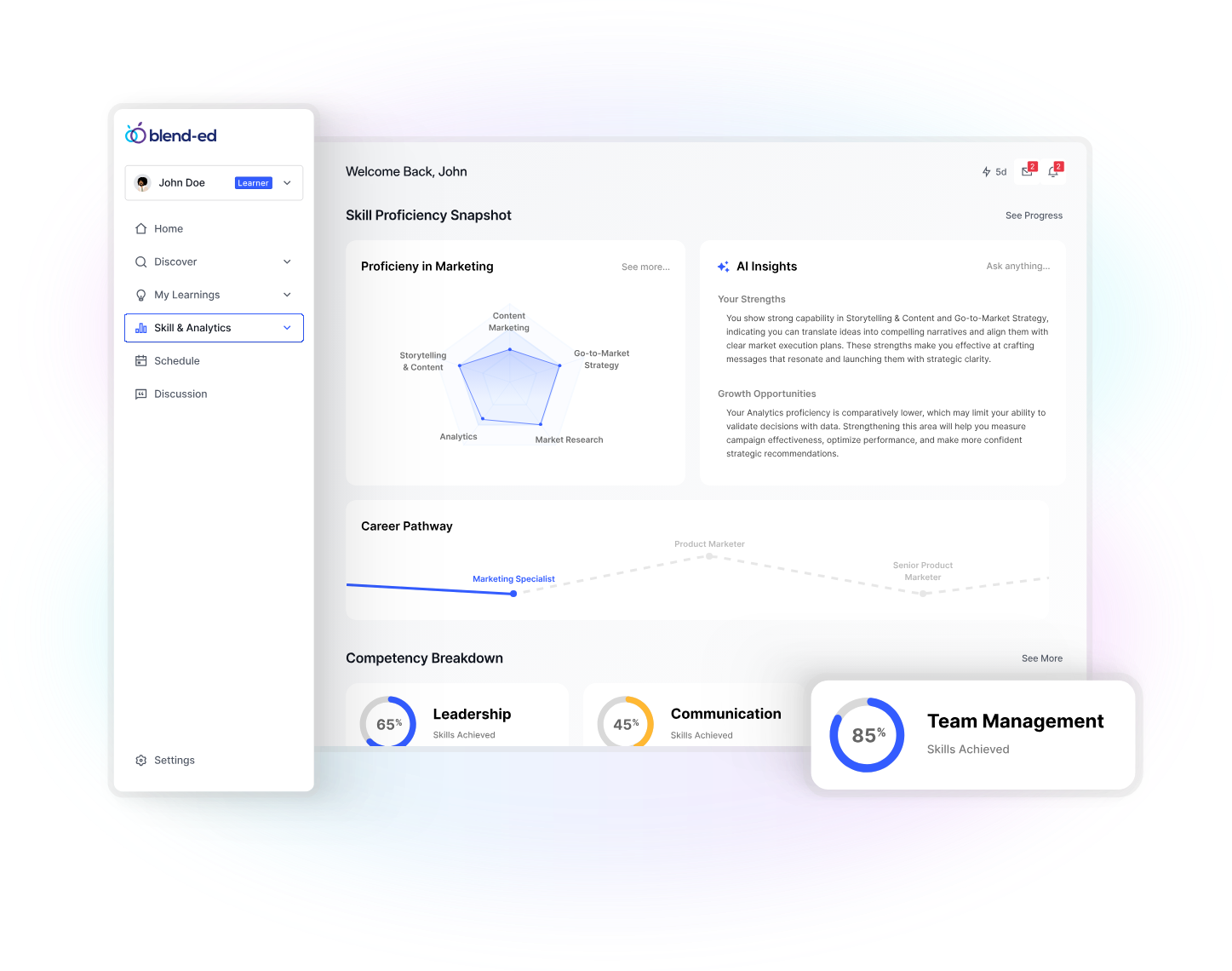
Blend-ed is designed to support structured blended learning across multiple client environments. It is particularly aligned with organizations that deliver training programs externally to corporate clients or operate multiple academies under a single system.
Blended Learning Capabilities
Blend-ed integrates instructor-led training, virtual classrooms, self-paced modules, scenario-based learning, and structured learning paths within one unified platform. Cohort management is deeply embedded, allowing scheduled sessions to connect seamlessly with digital reinforcement activities.
Attendance tracking, assessment workflows, certification generation, and learner analytics are structured around measurable skill progression.
Multi-Tenant and White Label
The platform supports multi-tenant architecture. Each client can operate within a dedicated branded environment while administrators maintain centralized oversight. Custom domains, client-specific dashboards, and isolated reporting structures make it suitable for multi-account training delivery.
Analytics and Skill Tracking
Analytics extend beyond course completion. Blend-ed emphasizes skill tracking and performance mapping. Learning progress can be tied to defined competencies, allowing reporting at individual, cohort, or client levels.
AI Capabilities
Blend-ed integrates AI tools including automated course generation, AI tutoring assistance, and knowledge retrieval systems. These features support scalable content production and learner personalization.
Limitations
Organizations seeking a minimal feature LMS may find the platform more comprehensive than necessary. Structured onboarding is recommended to leverage advanced features effectively.
Docebo (Best for enterprise internal learning and development)
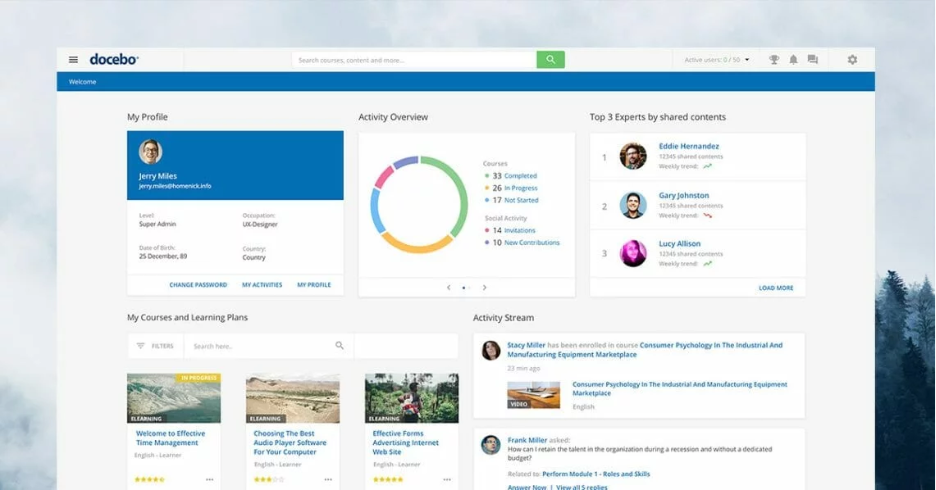
Docebo is widely recognized in the enterprise LMS space. It is designed to support internal employee development at scale across global organizations.
Blended Learning Capabilities
Docebo supports instructor-led sessions, virtual training integration, structured learning paths, certification workflows, and automation rules. Its blended approach allows organizations to schedule live sessions while integrating asynchronous learning modules.
ILT scheduling and webinar integration are mature features within the system. Automated enrollment rules can support large-scale internal training operations.
Enterprise Integration
The platform integrates with HR systems, CRM platforms, and enterprise identity providers. This makes it suitable for organizations that require centralized talent management and compliance tracking.
Reporting and Automation
Reporting tools are advanced and designed for enterprise compliance, regulatory tracking, and learning analytics. Automation capabilities allow internal L&D teams to scale structured training programs efficiently.
AI Capabilities
Docebo incorporates AI-driven content recommendations and learning suggestions. AI is positioned around personalization and automation rather than course generation.
Limitations
The platform is primarily optimized for internal enterprise learning. Multi-client or multi-tenant delivery for external training providers may require structural workarounds. Pricing is aligned with enterprise budgets.
Absorb LMS (Best for compliance-driven corporate training programs)
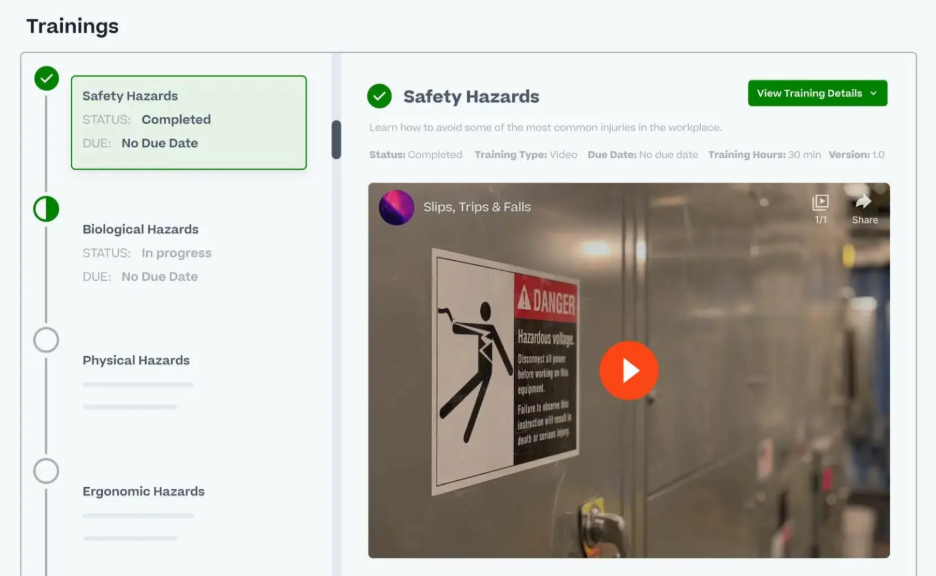
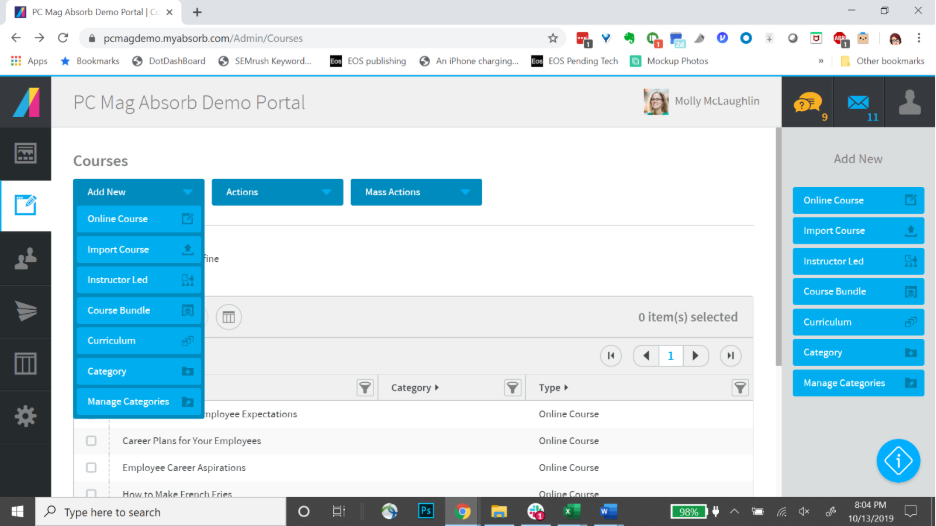
Absorb LMS focuses heavily on structured corporate learning, particularly where certification and compliance tracking are critical.
Blended Learning Capabilities
Absorb supports classroom-based training, virtual instructor-led sessions, e-learning modules, and certification paths. It allows training administrators to manage scheduled events alongside digital content delivery.
Attendance management and compliance workflows are structured clearly within administrative dashboards.
Reporting and Certification
Absorb offers strong reporting tools designed for compliance validation and certification lifecycle management. Expiry tracking, recertification automation, and audit-ready reports are strengths.
White Label and E-commerce
White labeling options are available. The platform also includes e-commerce functionality for organizations selling structured programs.
AI Capabilities
AI functionality is limited compared to emerging AI-first LMS platforms. Automation focuses primarily on enrollment and compliance workflows.
Limitations
Multi-client separation is not a core architectural focus. Training providers managing multiple external corporate accounts may need separate instances or structured account management processes.
TalentLMS (Best for mid-market training rollouts)
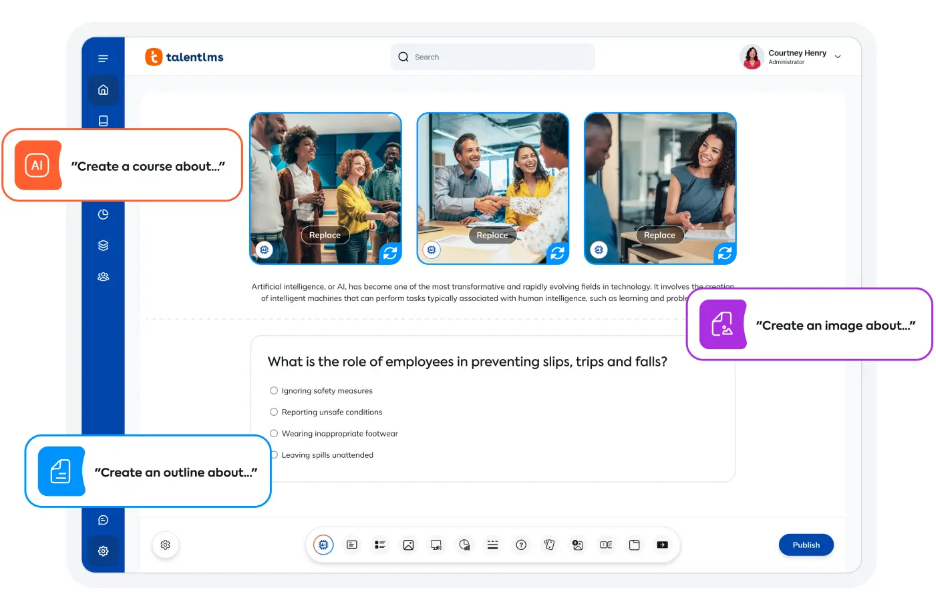
TalentLMS is positioned as an accessible LMS for mid-sized organizations seeking simplicity and fast deployment.
Blended Learning Capabilities
The platform supports instructor-led sessions, webinars, course management, and learning paths. It provides sufficient functionality for organizations that need basic blended delivery without deep customization.
ILT scheduling and content delivery are easy to configure, making it suitable for quick implementation.
Ease of Use
The interface is straightforward and intuitive. Organizations with limited technical resources can deploy and manage training programs without complex setup.
Reporting
Reporting capabilities are moderate and sufficient for mid-market operations. Advanced skill mapping and enterprise-grade analytics may require additional configuration.
AI Capabilities
AI functionality is minimal. The platform focuses more on usability than automation or AI-driven learning personalization.
Limitations
Multi-tenant management is limited. Training companies serving multiple corporate clients may find segmentation capabilities less flexible compared to enterprise-oriented systems.
Cornerstone OnDemand (Best for global HR ecosystem integration)
Cornerstone OnDemand operates within the broader HR technology ecosystem and supports talent management alongside learning delivery.
Blended Learning Capabilities
Cornerstone supports instructor-led training, digital learning, structured programs, and global compliance workflows. It is designed to integrate learning within performance management and talent development frameworks.
ILT scheduling, curriculum management, and compliance tracking are integrated into enterprise workflows.
Enterprise Ecosystem Integration
The platform integrates with HRIS systems and supports global workforce training initiatives. It is designed for organizations managing large employee populations across regions.
Analytics
Cornerstone offers enterprise-grade analytics aligned with talent performance metrics. Reporting can extend beyond training into workforce development tracking.
AI Capabilities
AI features support content recommendations and internal talent insights. AI is integrated within the broader HR system context.
Limitations
The platform is optimized for internal enterprise HR ecosystems. External training providers delivering programs across multiple independent corporate clients may encounter structural constraints. Implementation complexity and pricing reflect enterprise positioning.
Moodle (Best for highly customizable open-source deployment)

Moodle is one of the most widely adopted open-source LMS platforms globally.
Blended Learning Capabilities
Moodle supports blended learning through core features and plugins. Instructor-led sessions, assignments, quizzes, and learning paths can be configured. Webinar integration typically requires additional plugins or third-party tools.
Customization
As an open-source system, Moodle allows full customization of workflows, user roles, themes, and learning structures. Organizations with development teams can tailor the system extensively.
Community Ecosystem
A large global community contributes plugins and extensions. This enables extended functionality, though quality and support may vary depending on implementation.
AI Capabilities
Moodle does not include native AI-driven learning automation. AI functionality depends on third-party integrations.
Limitations
Blended learning workflows may require technical configuration. Ongoing maintenance, hosting, and security management require technical expertise. For organizations without internal technical teams, implementation complexity can increase.
What Makes a Strong LMS for Blended Learning
A high-performing blended learning LMS should provide:
- Instructor-Led and Virtual Integration — Scheduled sessions, attendance tracking, webinar integration, and cohort management must work seamlessly with digital learning modules.
- Structured Learning Paths — Blended learning relies on coordinated sequencing of live and digital components.
- Reporting and Analytics — Completion tracking alone is insufficient. Modern systems should provide performance insights and measurable outcomes.
- White Label Options — Organizations delivering training externally need branded environments.
- Multi-Tenant or Multi-Client Architecture — Training providers serving multiple clients require structured separation and reporting per account.
- AI and Automation — AI increasingly supports content generation, personalization, and efficiency in learning operations.
Blended Learning vs Traditional E-Learning
Traditional e-learning focuses primarily on digital self-paced modules. Blended learning integrates instructor-led experiences with digital reinforcement. Research consistently shows that blended models improve retention, engagement, and applied skill development compared to purely digital formats.
Choosing the Right LMS Based on Your Business Model
The best LMS for blended learning depends on how your organization delivers training.
- Internal corporate L&D teams often require enterprise automation and HR integration.
- Global enterprises need compliance alignment and workforce scalability.
- Educational institutions may prioritize open-source flexibility.
- Training providers serving multiple corporate clients should prioritize multi-tenant architecture, white labeling, and structured client-level analytics.
Align your LMS decision with operational structure rather than marketing claims.
Frequently Asked Questions
What is the best LMS for blended learning?
The best LMS depends on your business model. Enterprise organizations may prioritize HR integration, while training providers may require multi-client delivery architecture.
Do all LMS platforms support instructor-led training?
Most modern LMS platforms support instructor-led sessions, but depth of integration and automation varies.
Is AI necessary in a blended learning LMS?
AI is not mandatory, but it enhances personalization, automation, and content scalability.
Can an LMS support multiple corporate clients?
Some LMS platforms offer multi-tenant architecture. Others require separate instances or configuration adjustments.
Is blended learning more effective than online-only training?
Blended learning typically improves retention and engagement because it combines interaction with digital reinforcement.