

Many training programmes put nearly all their effort into the session itself. The room is booked, the slides are polished, the trainer is prepared. Then the session ends, learners return to their desks, and there is no structured process to reinforce or evaluate what they learned.
This article sets out what should happen before, during and after a live training session so that learning continues beyond the classroom. It covers pre-work, live instruction, practice, post-session activities and follow-up assessments, and it applies whether your sessions are in a room or delivered virtually.
Why the session alone is not enough
Learning continues after a live session. When a programme focuses only on the session, three problems can appear:
- Learners arrive at different starting points. Some know the topic well, others are new to it, and the trainer pitches the session at an imagined average.
- Session time goes on delivering information. There is less room for the practice and feedback that live sessions are best placed to offer.
- Nothing brings the learning back afterwards. Without follow-up, it is hard for learners to apply new skills, and hard for the organisation to see whether anything changed.
Design the activities around the session as part of the same programme.
At a glance: before, during and after
| Phase | Purpose | Typical activities | What it produces |
|---|---|---|---|
| Before | Prepare learners and give the trainer information | Short pre-work, diagnostic questions, a scenario to attempt, manager briefing | Baseline data and questions to bring to the session |
| During | Build skill through interaction and feedback | Brief input, practice, case work, discussion, feedback | Practised skills and a draft action plan |
| After | Move learning into the job | Action plan, on-the-job tasks, peer discussion, manager conversation | Learner reflections and opportunities to observe application |
| Follow-up | Check recall and application | Spaced knowledge checks, application-based assessment, reflection | Responses and observations to guide further support |
Before the session: prepare learners and the trainer
Pre-work does two jobs. It prepares learners to take part meaningfully, and it tells the trainer where the group stands.
Design pre-work with a clear purpose. Keep it focused and manageable. A good starting point is to ask what learners need to know or have thought about to get value from the live session, and build only that.
Useful pre-work formats include:
- A short scenario from the learner's own role, attempted before any teaching
- A diagnostic quiz to check knowledge, or a self-assessment to understand confidence
- A brief video or reading with one or two check questions
- A reflection prompt, such as "Describe a recent situation where this skill would have helped"
Tell learners how their preparation will be used. For example, ask them to bring a decision from the scenario and explain that the group will compare its reasoning.
Prepare the trainer too. Review the pre-work responses before the session. If many learners struggled with one concept, spend time there. If their answers show a good grasp of it, move to practice.
Brief the line manager. A short note explaining the purpose of the training, what the learner will be doing, and how the manager can support application afterwards makes later follow-up much easier.
During the session: open with connection, then move to live instruction and practice
Open by connecting to the pre-work
Start with a short recap drawn from what learners did beforehand. This shows that the preparation mattered and lets you adjust the session to the group.
Keep live instruction purposeful
Live instruction works best when it is brief and targeted: the concepts learners are most likely to find difficult, a demonstration of the skill, or a clarification of misunderstandings revealed by the pre-work. Content that learners can reasonably study on their own can often sit in the pre-work instead.
Give practice the most room
Classroom time offers valuable opportunities for interaction, guided practice and immediate feedback. Practice activities that work well in live sessions include:
- Role play with observers, where one person practises, one plays the counterpart and one gives feedback
- Case work, where small groups apply a method to a realistic workplace situation
- Decision discussions, where there is no single right answer and learners compare their reasoning
- Peer teaching, where learners explain an idea to each other and reveal gaps
- Live problem solving, where participants bring a real work challenge and leave with a plan
Build feedback into each activity. Specific feedback helps learners see what worked and what to improve.
Close with a practical next step
End by asking each learner to write down one or two specific things they will do differently, when they will do them, and what support they might need. Learners can use the draft action plan to choose a workplace task after the session.
After the session: move learning into the workplace
After the session, give learners opportunities to apply the skill and discuss what happens.
- Finalise the action plan. Within a couple of days, ask learners to confirm what they will apply and how they will know it is working.
- Set on-the-job tasks. For example, "Try the feedback model in one conversation this week and note what happened."
- Encourage peer discussion. A shared space for questions and examples lets the group keep learning from each other.
- Hold a manager conversation. A short check-in helps learners get support and makes the action plan feel real.
- Share resources. Job aids, checklists and short recaps give learners something to reach for when they need it.
Follow-up assessments: check retention and application
Follow-up assessment answers two questions: did learners retain what they learned, and are they applying it?
Spaced knowledge checks. Short quizzes released days or weeks after the session bring key ideas back to mind and show what learners can recall at that point. Compare responses with an earlier assessment if you want to examine change over time.
Application-based assessment. Scenario questions show how learners respond to a situation. A practical task lets an assessor observe the skill in that setting. A written reflection records what learners report doing.
Evidence from the workplace. Behaviour change and business outcomes usually require evidence beyond quiz scores, such as manager observations, workplace assessments or operational performance data.
Learner feedback. A brief survey after the session and again later helps you see how relevant and useful the programme felt, and what to improve.
Use the results to act: offer extra support to those who need it, and refine the programme for the next group.
Example scenario: designing a session on feedback conversations
This is an illustrative scenario showing how these steps fit together, not a specific client programme.
Here is how the framework plays out for a half-day session for new team leads on giving feedback.
The outcome. Learners need to be able to hold a structured feedback conversation with a direct report: describe the behaviour, explain its impact, and agree a next step. That is an observable action, so it can be practised and assessed.
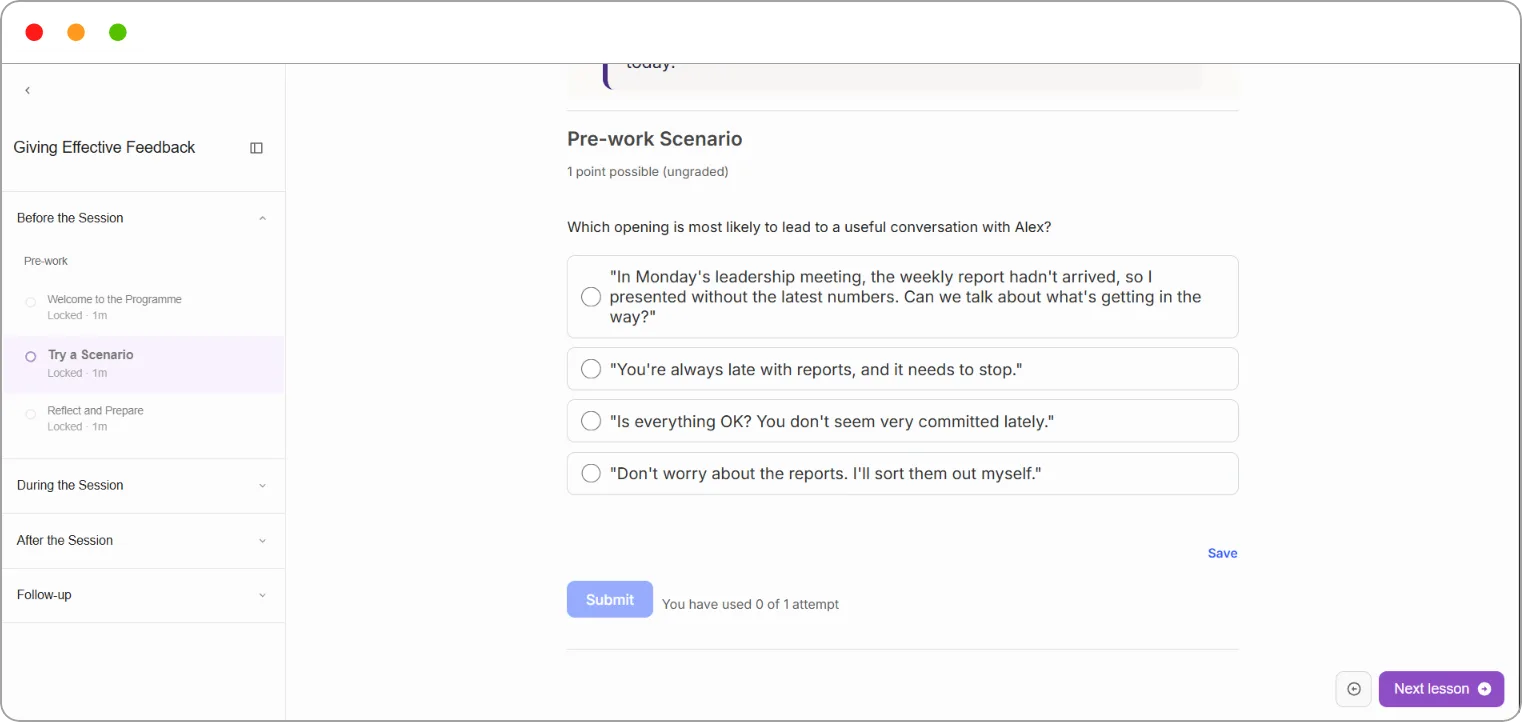
Before the session. I would set one scenario from a team lead's day, such as a team member who keeps missing handover deadlines, and ask learners to write the opening two sentences they would say. I would add a short self-rating on confidence. I choose these two tasks because they cost little time and give me something specific to work with: real opening lines, and a view of where confidence is low.
What I would change after seeing the responses. If many openings start with judgement ("You are careless with deadlines") rather than observation, I would shift the live session towards separating behaviour from interpretation, and shorten the part on structure. If most openings are already observational, I would move straight to harder conversations. The point of pre-work is that this decision is made from evidence, not guesswork.
During the session. I would open with anonymised examples from the pre-work, run a short demonstration, then give most of the time to role play in threes with an observer using a simple checklist. I choose role play because the skill is spoken, and learners need to hear themselves and get feedback.
After the session. Each learner commits to holding one real feedback conversation within two weeks, and posts a short reflection on what they said and how it went. A line manager check-in follows, using a brief prompt guide. A scenario-based quiz a few weeks later asks learners to choose or rewrite responses.
How I would check application. Quiz results can show what learners recall and how they respond to a scenario. Reflections and manager conversations can show whether learners report using the skill, although they do not necessarily show how well the conversation went. An observed practice or a workplace assessment can provide more direct evidence when appropriate. For wider outcomes, I would agree one measure with the organisation, such as team engagement pulse results, and treat any change as supporting evidence rather than proof.
The details will differ for your topic and audience, but the pattern holds: each activity either prepares the next one or produces evidence for it.
How an LMS helps hold the sequence together
Pre-work, the live session, follow-up activities and assessments are easier to manage when they sit in one place. A learning management system can bring learners, content, assessments and communication together so everyone knows what comes next.
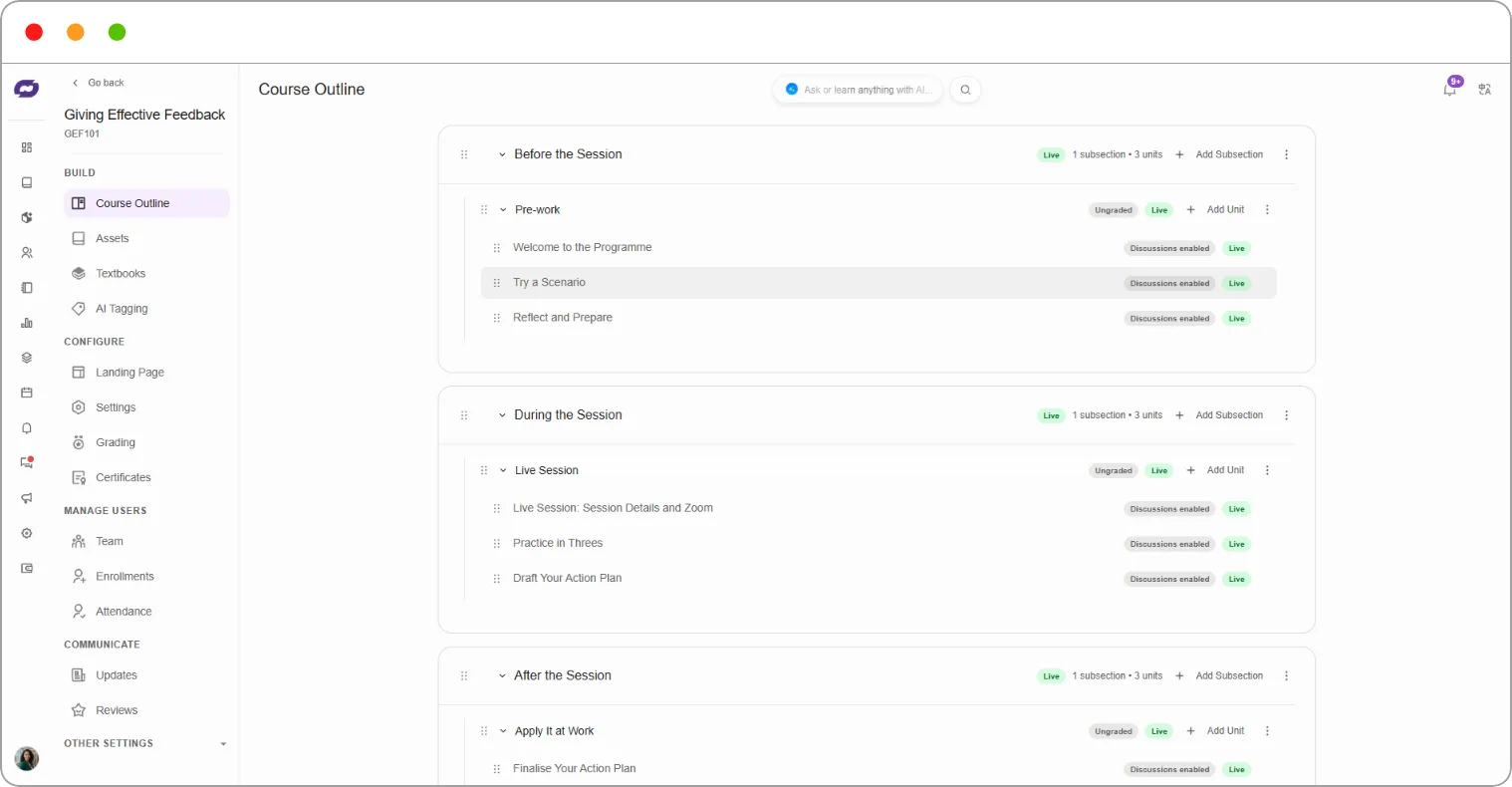
Blend-ed is built on Open edX and combines online learning with live and classroom training. Teams can organise pre-work, live sessions and assessments as part of a training programme, then review learner progress and assessment results. Platform records show participation and assessment activity; evidence of workplace application may need to come from observations or follow-up conversations.
For a practical guide to connecting online work with live teaching, see how to design blended training.
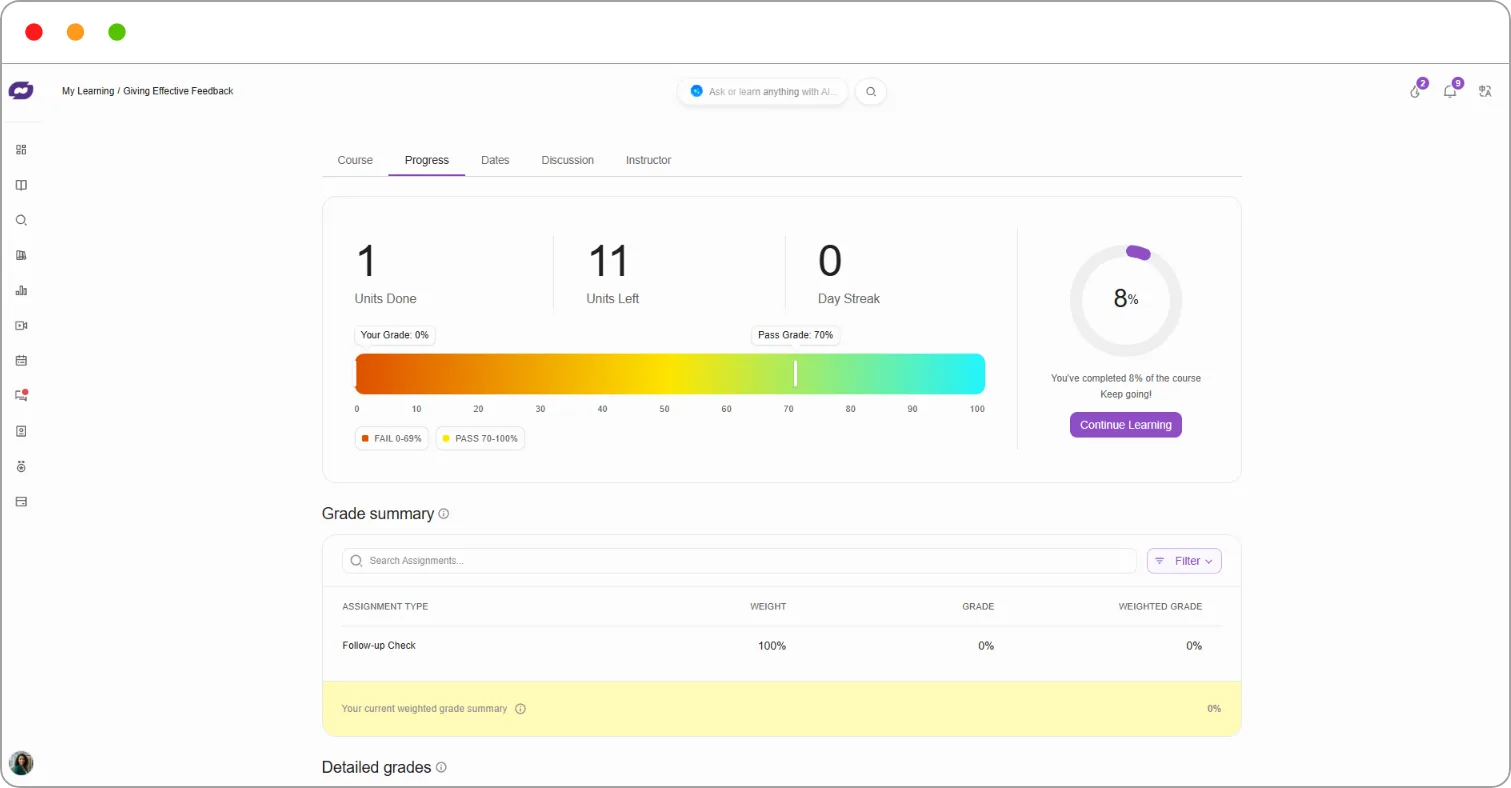
Explore training delivery and assessments and grading in Blend-ed.