Set the level each job role needs in each skill.
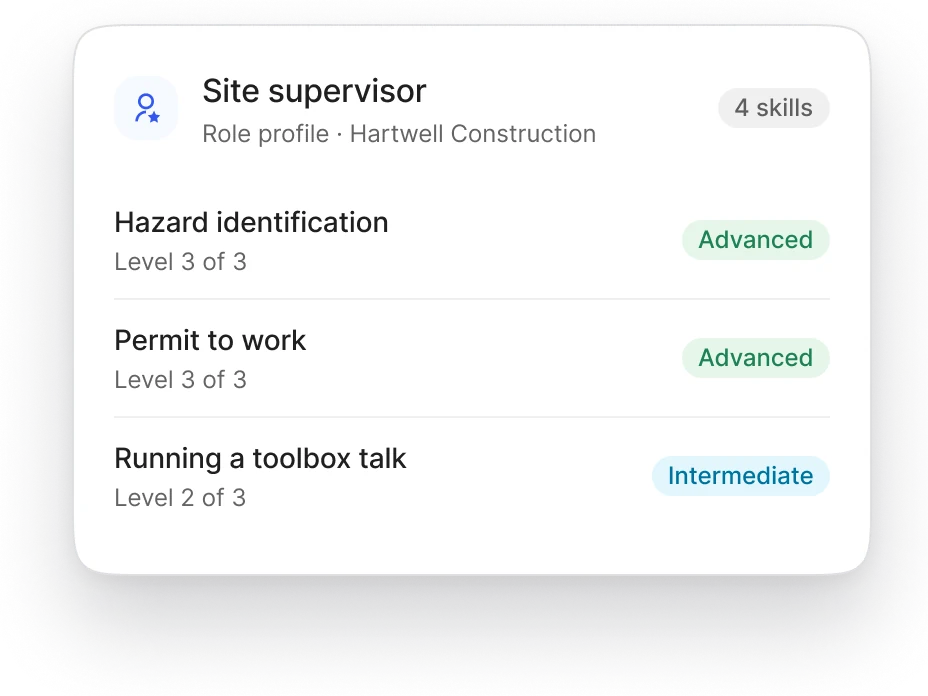
A proficiency level says how far a learner has come in a skill. A role profile lists the skills a job role needs, and the level it needs in each.

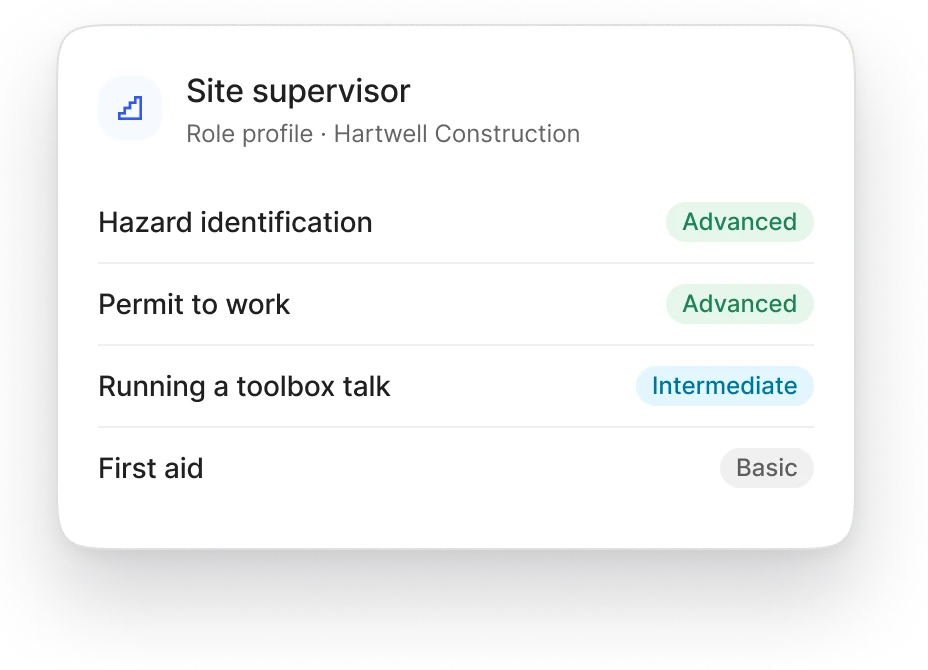
One role profile.
One skill can need a different level in each role. For example, a site supervisor needs permit to work at a higher level than a new starter on the same site.
1
Hazard identification: Advanced
2
Permit to work: Advanced
3
Running a toolbox talk: Intermediate
4
First aid: Basic
Where a learner's level comes from.
A starting point
On a learner's first visit, a short pre-assessment of questions linked to skills sets their starting levels.
Their training
Every tagged lesson they complete, and every tagged, graded question they answer correctly, is recorded against the skill.
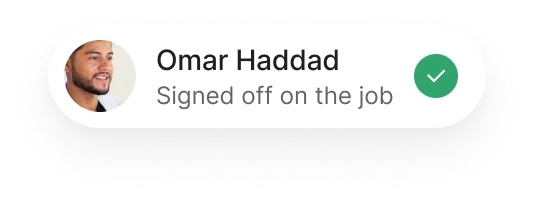
Sign-off on the job
An assessor or manager signs off a skill the learner shows at work.
Who sets the profiles.
You set role profiles for the roles your training serves, or a client's administrator sets them for the client's own roles. Skill gap analysis then compares each employee's levels with the profile for their role.
Related.
Part of Skills and competencies: from the framework to the passport.
Skill gap analysis: employees compared with their role profile.
Competency frameworks: the skills and competencies a profile draws on.
Training matrix: the training each role requires.
Skill tagging: how lessons and questions record skills.

Build a role profile for one of your clients.
Bring a client's job roles. We'll set the levels with you and show the gaps they reveal.