Set written assignments, and choose who marks them.
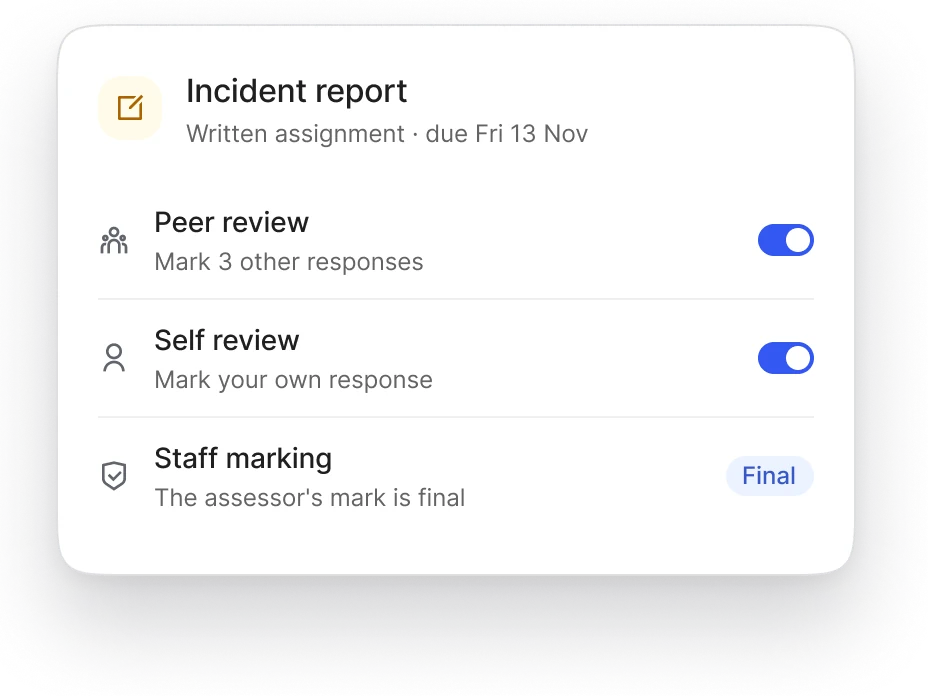
Learners write their answers or upload files. Then peers, the learners themselves and your assessors mark the work against one rubric, in the steps you switch on.


From response to final grade.
1
Learners respond
A written answer to one or more prompts, a file upload, or both. Files can be required, optional or switched off.
2
Practice on samples (optional)
Before marking anyone else, learners mark sample responses you wrote, until their marks match yours. This step comes with peer review.
3
Peer review (optional)
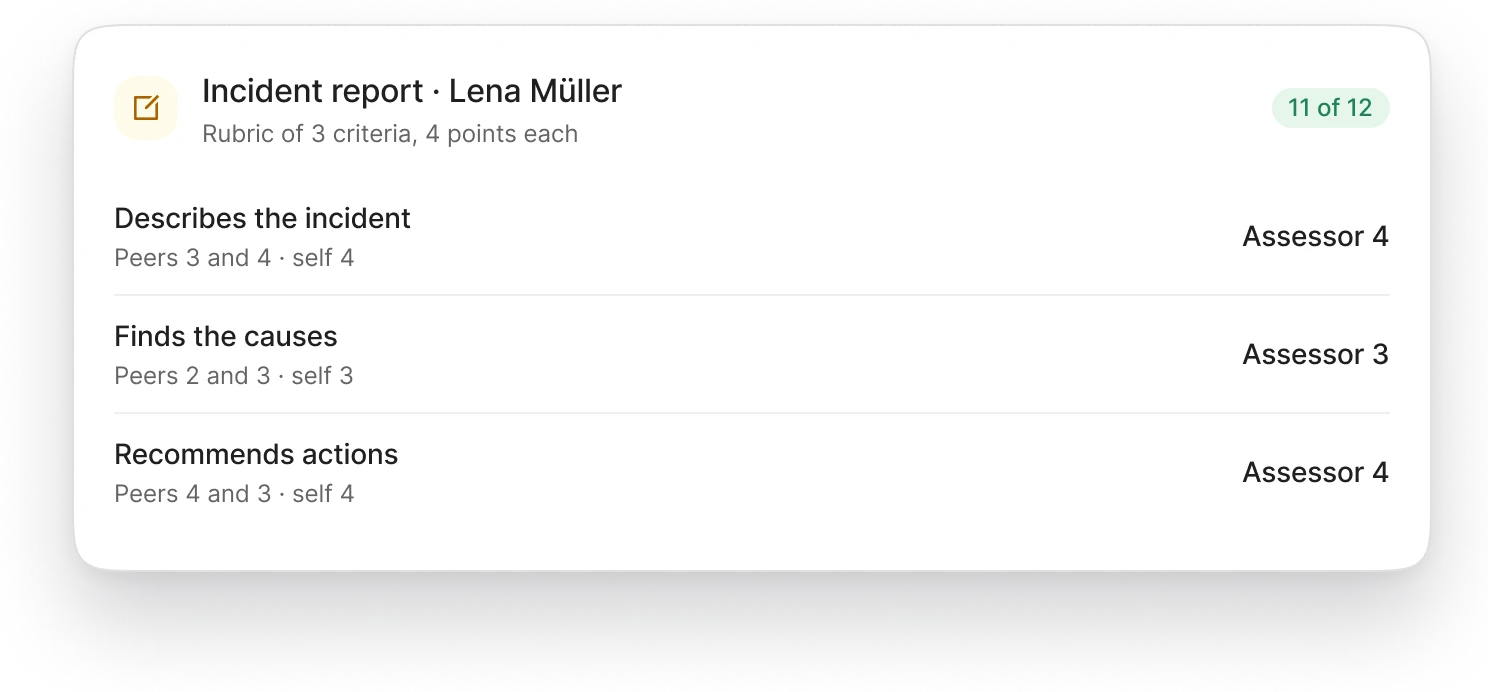
Each learner marks a set number of other learners' responses, and each response needs a set number of reviews. A criterion's score is the median of its peer marks.
4
Self review (optional)
Learners mark their own response with the same rubric.
5
Staff marking
A trainer or assessor marks the response against the rubric and adds comments. The staff mark overrides the others, and the learner gets a final grade once this step is done.


Settings.
Rubric: one rubric marks every prompt in the assignment. Each criterion has options with points, or is comments only. Rubric marking and assessor sign-off →
Dates: a due date for responses, and separate due dates for each review step.
Waiting for peers: if a response hasn't had enough reviews after seven days, the number it needs drops to 30% of the original, with at least one, so nobody waits forever.
Team assignments: a team hands in one response for the whole team.
Deadlines: written assignments keep their own dates, outside the course's grace period.
Related.
Part of Assessments and grading
Internal verification and moderation: a second check on marked work.
Portfolios and evidence: where the work and its marks are kept.
Assessment review: every submission for each learner.

Show us one of your written assignments.
We'll set it up with you, with its rubric and the marking steps you use today.