Every seat in a cohort is counted once, however it was filled.
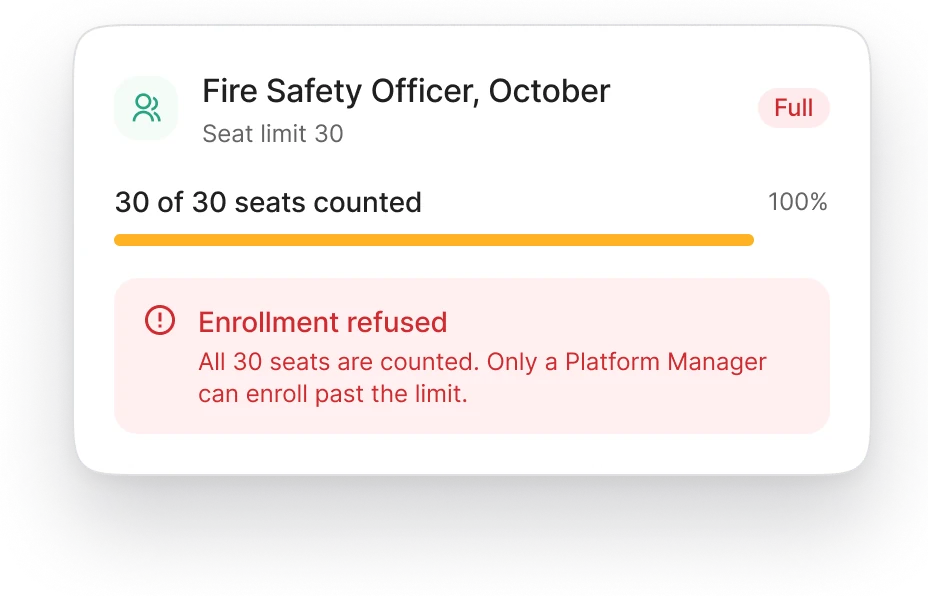
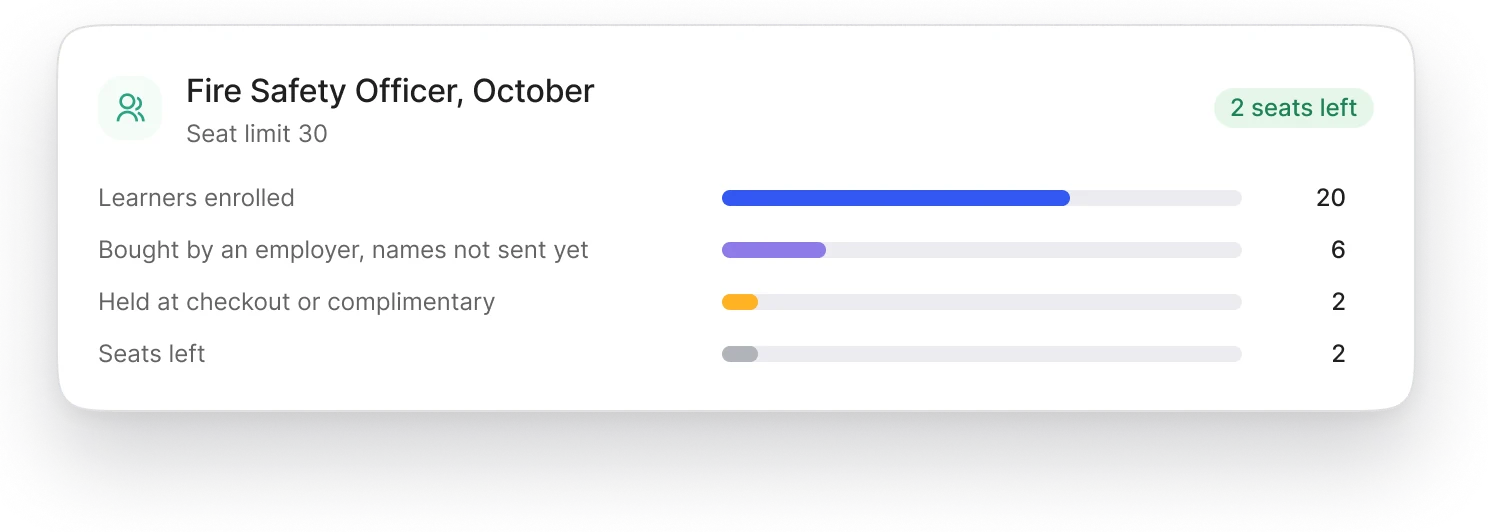
Enrolled learners, seats a client bought but hasn't assigned, seats held while someone pays, and free places all count against the same limit. When the limit is reached, nobody takes another seat.

How one cohort's seats add up.

1
Seat limit: 30
2
Learners enrolled: 20
3
Seats an employer bought, names not sent yet: 6
4
Seat held while a learner pays at checkout: 1
5
Complimentary seat, given with a reason: 1
6
Seats left: 2
A checkout hold lasts 15 minutes. If the learner doesn't pay in that time, the seat goes back into the count. If two people try to take the last seat at the same moment, only one gets it.
The cases that usually lead to overselling.
Case
What Blend‑ed does
An employee doesn't accept their invitation
After 14 days the seat is released back to the cohort.
A client gives a seat to someone else
Allowed until enrollment closes. After that, a released seat stays empty.
You lower the seat limit
It can't go below the seats already taken.
Your team enrolls past the limit
Refused, unless a Platform Manager does it, and that is recorded.
A free place is added
It needs a reason and counts toward the limit like any other seat.
A required session is full
Enrollment stops when a required live or classroom session has no date with room left.
Cohort seats and session seats.
A cohort seat lets a learner take part. Each session date has its own room and online seat limits, counted separately, because one date can hold learners from several cohorts and clients. Session →
Related.
Part of Cohorts and enrollment: every way learners get into a cohort.
Seat purchase and assignment: how a client buys seats and names its people.
Checkout and payment gateways: the price and seat held while someone pays.
Cohorts and batches: the seat limit of each cohort.

Show us a cohort that sold out.
We'll set it up with its seat limit, then book it from a client's portal and the storefront at the same time.