
Government training has a workforce problem as much as a technology problem.
In the U.S. federal workforce, 44% of employees were over 50 in late 2025, while only about 7% were under 30, according to the Office of Personnel Management. At the same time, government agencies continue to deal with skills gaps in areas such as cybersecurity and acquisition.
That puts more pressure on agencies to transfer knowledge, maintain qualifications and develop skills without losing reliable training records.
But government training is not one use case.
A federal civilian agency may need FedRAMP certification and federal training workflows. A police academy needs to know whether officers are qualified today, not simply whether they once completed a course. A regulator may train thousands of external professionals. A ministry may need one learning platform across several departments, regions and languages.
That is why this is not a ranking from one to nine.
Each LMS below is included because it solves a distinct government or public-sector training problem. Blend-ed appears first because this comparison is published by Blend-ed, but where another platform is a stronger fit, we say so.
Key Takeaways
What Is the Best LMS for Government?
There is no universal winner. Blend-ed fits multi-organisation and multilingual public-sector training. Meridian and TotaraGov are particularly strong for U.S. federal training administration. Vector Acadis is purpose-built for public-safety and readiness programmes, while Cornerstone suits large government workforces that want learning tied to broader talent management.
Which LMS Is Best for U.S. Federal Agencies?
Start with the requirements that can eliminate a vendor before the demo: FedRAMP status, security class, federal workflows, authentication, accessibility and integrations. Meridian, TotaraGov, Docebo Federal, Cornerstone and Acadis all have credible federal offerings, but they are not interchangeable.
What Is the Best LMS for Defense Contractors and Government Agencies?
GyrusAim, Meridian and Cornerstone are worth evaluating for defense-oriented environments. Gyrus is particularly focused on military and contractor training, Meridian on federal training administration, and Cornerstone on large-scale workforce and talent management.
What Should Public-Sector Buyers Evaluate First?
Security and deployment come first, followed by organisational structure, accessibility, certification and audit requirements. Course-authoring features matter only after those constraints are understood.
Best Government LMS Platforms at a Glance
| LMS | Best suited to | Government evidence | Federal position | What makes it different |
|---|---|---|---|---|
| Blend-ed | Multi-organisation and multilingual public-sector training | Built for training across multiple organisations and audiences | Not FedRAMP Certified | Multi-organisation learning |
| Meridian LMS | Federal training administration | Federal Civilian, DoD and Intelligence focus | FedRAMP Certified | SF-182 and EHRI |
| Vector Acadis | Public safety and mission-critical training | Federal and public-safety training operations | FedRAMP Certified | Readiness and credential management |
| Cornerstone | Large government workforces | DOJ, USPS, GSA and other public-sector customers | FedRAMP and IL4 offering | Learning plus workforce management |
| TotaraGov | Configurable federal workforce learning | Dedicated government product; USDA/HHS AgLearn deployment | FedRAMP Certified | Federal workflows plus configurability |
| GyrusAim | Military, defense and contractor training | Vendor-documented defense programmes and federal features | Verify proposed deployment | Defense-oriented training management |
| Docebo Federal | Enterprise federal learning | Dedicated government environment | FedRAMP Certified | Enterprise LMS at federal scale |
| Learnsoft | State and multi-agency government | Vendor reports deployment across 70+ state agencies | Verify proposed deployment | Multi-agency LMS and talent management |
| Moodle for Government | Custom government deployments | Dedicated U.S. government offering | FedRAMP Ready | Open-source control |
Methodology: We prioritised LMS platforms with verifiable government security status, government-specific workflows, documented public-sector deployments or a distinct operating model for government training. A generic government landing page was not enough to make the list.
FedRAMP statuses should always be checked against the official FedRAMP Marketplace before procurement because product status and authorised environments can change.
9 Best LMS Platforms for Government & Public Sector Training
1. Blend-ed — Best for Multi-Organisation and Multilingual Public-Sector Training
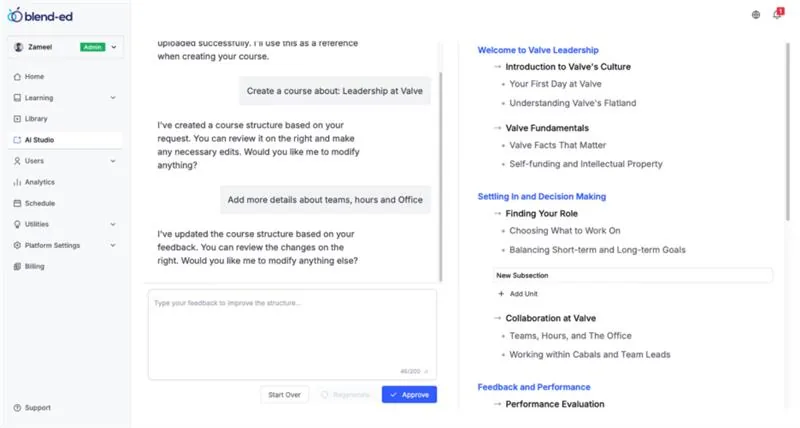
Blend-ed fits a different problem from the federal LMS products later in this comparison.
Its strongest use case is a training programme that spans several departments, organisations, regions or external audiences but still needs central oversight.
Consider a regulator that trains its own employees alongside licensed professionals and partner organisations. Or a government academy serving multiple departments, each with its own administrators and learner population.
Creating an independent LMS for every group adds cost and administrative work. Putting everyone into one undifferentiated portal creates permission and reporting problems.
Blend-ed is designed around multi-organisation delivery. Separate audiences can operate within a centrally managed learning environment, which is the same architectural challenge explored in our guide to multi-tenant LMS platforms.
It also supports multilingual delivery, including Arabic and right-to-left interfaces, alongside cohorts, structured programmes, certificates and skills-based learning.
That makes Blend-ed more relevant to ministries, regulatory bodies, government academies and international public-sector programmes than to a U.S. agency buying specifically around federal cloud procurement.
Where this platform fits:
- ministries and multi-department organisations
- government and public-sector academies
- regulatory bodies training external professionals
- programmes involving multiple organisations
- multilingual or cross-region training
- competency and skills development
What to check:
Blend-ed is not FedRAMP Certified. If FedRAMP certification is mandatory for the procurement, start with certified federal products such as Meridian, TotaraGov, Docebo Federal, Cornerstone or Acadis.
2. Meridian LMS — Best for Federal Training Administration
Meridian is less well known outside government than many enterprise LMS brands. Inside this comparison, that is irrelevant.
Its value is specialization.
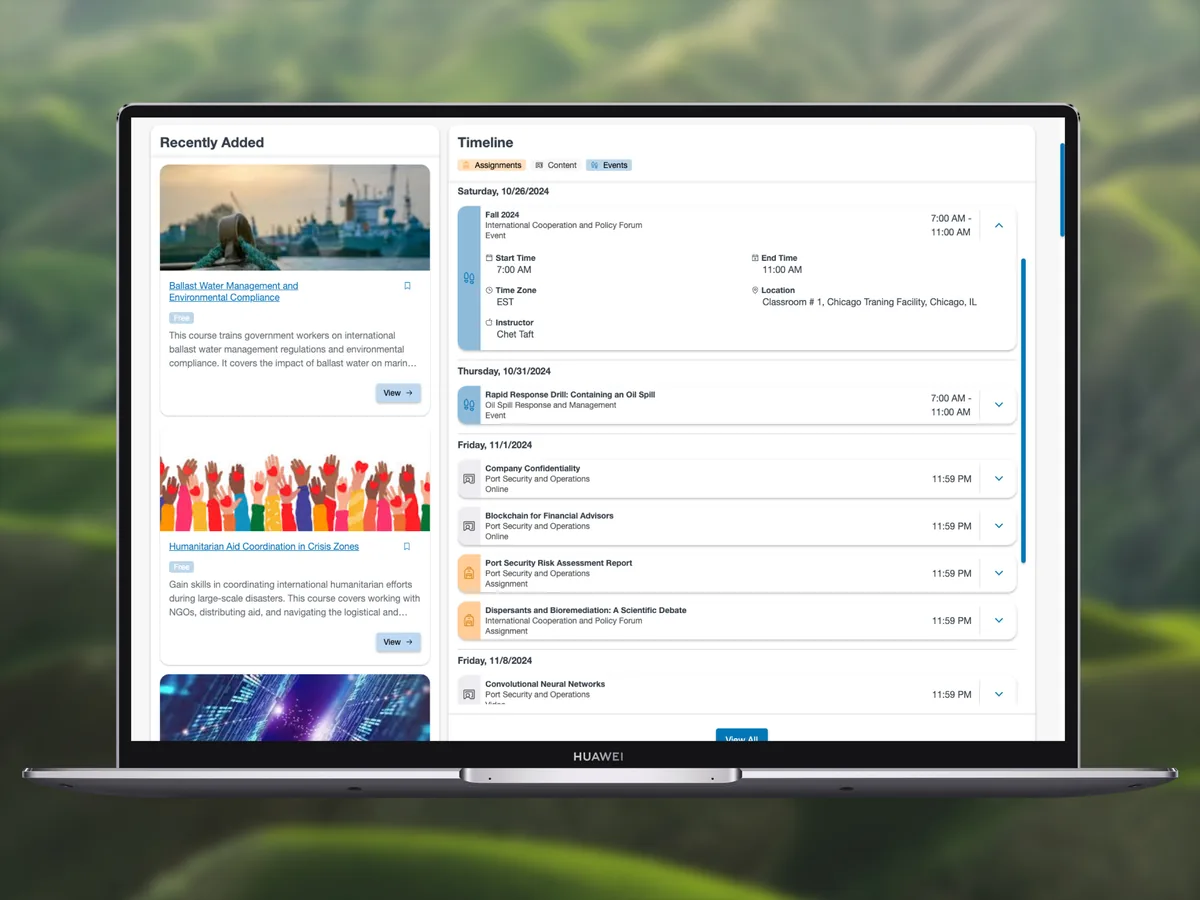
Meridian supports federal workflows including Standard Form 182, used for certain external training requests and approvals, and Enterprise Human Resources Integration reporting.
It also supports multi-domain administration, certification tracking, blended learning and training for contractors and other external audiences. Meridian positions the platform specifically for Federal Civilian, Department of Defense and Intelligence environments.
Its security status is independently verifiable. Meridian LMS is listed in the FedRAMP Marketplace as a FedRAMP Certified Moderate service.
This is where Meridian differs from a general enterprise LMS. If the training team needs to manage federal approvals, formal training records and reporting rather than simply distribute courses, its product model is unusually well aligned.
Where this platform fits:
- federal civilian agencies
- SF-182 workflows
- federal workforce training records
- certification-heavy programmes
- DoD and intelligence-related environments
- government contractor training
What to check:
Meridian is specialised. If the organisation is primarily looking for a large talent ecosystem, consumer-style learning experience or broad commercial content marketplace, products such as Cornerstone or Docebo may be a better match.
3. Vector Acadis — Best for Public Safety and Mission-Critical Training
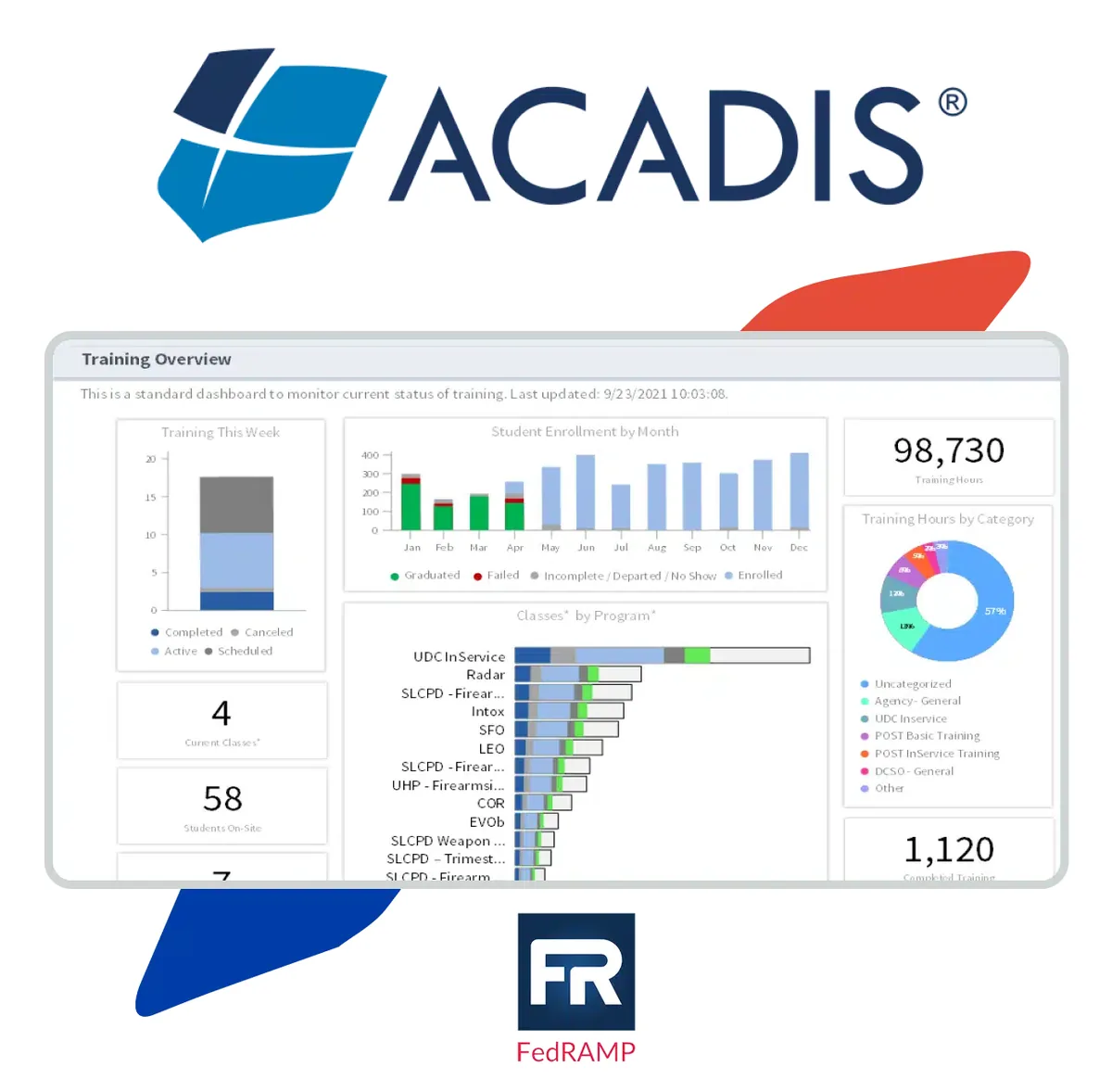
A police academy and a normal corporate L&D department should not be buying from the same checklist.
Vector Solutions' Acadis Readiness Suite is designed around that distinction.
Acadis combines learning with certification, academy operations, scheduling, compliance and readiness management.
Its federal product supports high-volume training operations, instructors, prerequisites, recurrences, approvals and reporting rather than treating instructor-led training as an add-on.
The difference becomes important when completion is not the end state.
A public-safety organisation may need to know whether someone has completed classroom instruction, passed a practical assessment, holds a current credential and remains ready for duty.
Acadis is built much closer to that operating model than most conventional LMS products.
Where this platform fits:
- law enforcement
- fire and emergency services
- public-safety academies
- federal training centres
- certification authorities
- military and mission-critical training
What to check:
For straightforward office compliance training, Acadis may be more operationally sophisticated than necessary. Its value is highest where training, qualification and readiness are closely connected.
4. Cornerstone — Best for Large Government Workforces
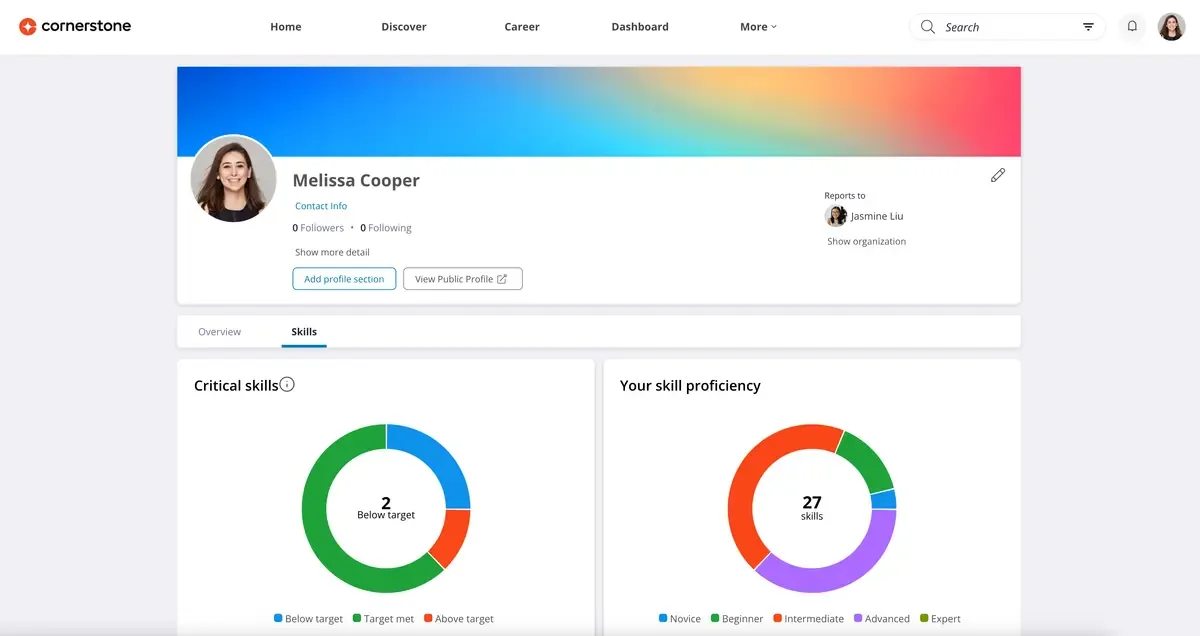
Cornerstone approaches the government market from workforce management rather than specialised training administration.
That can be exactly what a large agency needs.
The platform combines learning with skills, performance, recruiting, workforce planning and talent development. Its public-sector presence includes major U.S. government organisations and state and local agencies.
The broader proposition is therefore different from Meridian or Acadis.
Cornerstone makes more sense when the agency is asking questions such as:
- Which capabilities are we missing?
- How do we reskill employees?
- Who could move into critical roles?
- How do learning and performance connect?
- How do we manage succession as experienced employees leave?
That is particularly relevant for large government workforces where learning is part of a broader workforce strategy rather than a standalone compliance system.
Where this platform fits:
- large federal workforces
- state and local government
- workforce reskilling
- succession and talent development
- organisations combining LMS and talent management
- defense environments requiring an IL4-capable offering
What to check:
Cornerstone is a broad workforce platform. If the requirement is narrowly focused on federal course administration, certification or readiness, a specialist product may be easier to justify.
5. TotaraGov — Best for Configurable Federal Workforce Learning
TotaraGov combines federal-specific functionality with a configurable learning architecture.
Its government product supports SF-182 workflows and EHRI reporting. Public-sector deployments such as AgLearn also demonstrate how Totara can support federal training records, accessibility requirements and organisation-specific learning environments.
The reason to consider TotaraGov is therefore not simply that it supports government.
It combines federal administration with considerable flexibility around audiences, workflows, programmes and reporting.
That can be useful for agencies whose training structure does not fit neatly into a fixed SaaS model.
Where this platform fits:
- federal civilian agencies
- agencies using SF-182 and EHRI
- recurring mandatory training
- workforce development
- complex audiences or organisational structures
- organisations that require substantial configuration
What to check:
Configurability creates implementation decisions. Ask to see the proposed operating model, permissions and workflows rather than evaluating the platform only through a standard vendor demo.
6. GyrusAim — Best for Military, Defense and Contractor Training
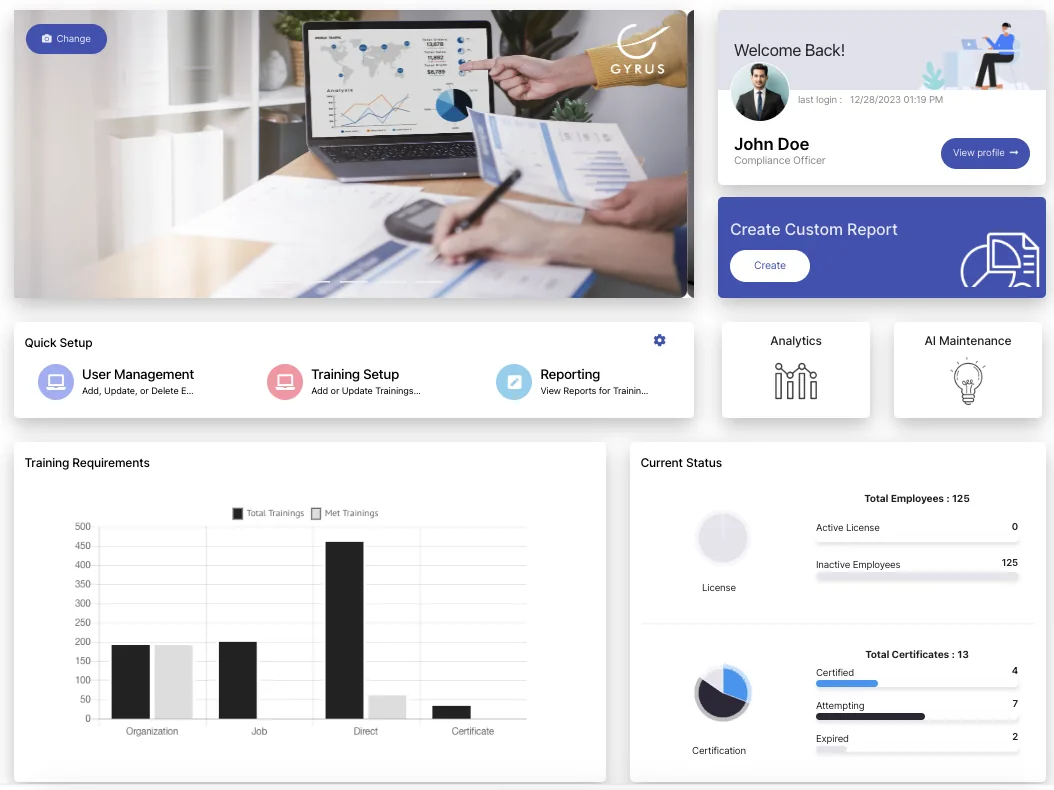
GyrusAim is worth including because defense-oriented training introduces requirements that a typical LMS comparison barely touches.
The product supports certifications, instructor-led training, federal training processes and flexible deployment models, and Gyrus has specific government and military offerings.
Its defense positioning includes role-specific training, contractor training and deployment options for controlled environments.
That operating model is much closer to the search intent around LMS platforms for defense contractors and government agencies than many mainstream corporate LMS products.
Where this platform fits:
- military training
- defense contractors
- role-specific qualifications
- instructor-led defense programmes
- certification-heavy environments
- organisations seeking controlled deployment options
What to check:
Do not infer a security certification from the words military or government. Ask which standards and controls apply to the exact deployment in the proposal.
7. Docebo Federal — Best for Enterprise Federal Learning
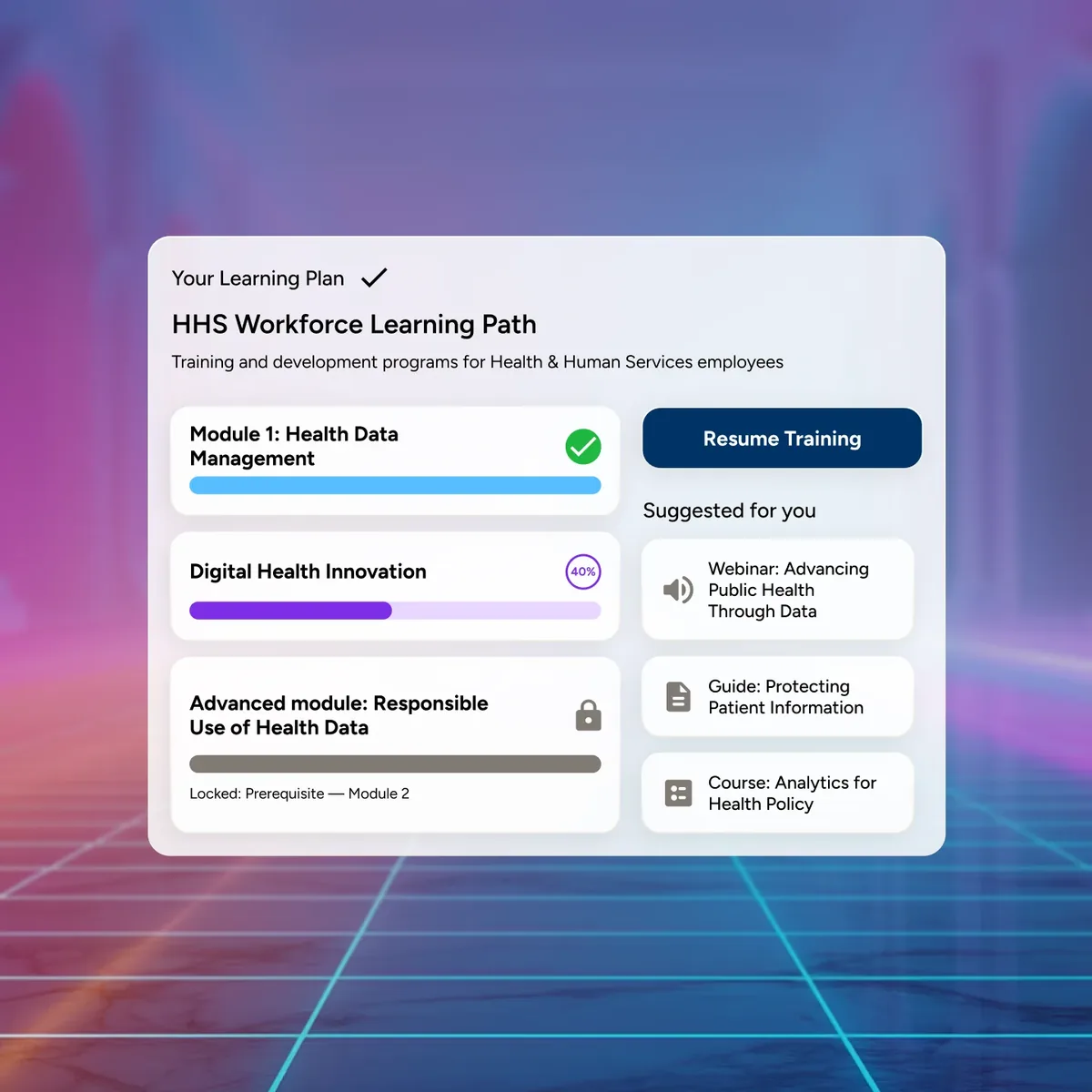
Docebo brings a mature enterprise LMS into a dedicated government environment.
Its federal offering is built for government organisations that need enterprise-scale learning, automation, reporting, certification, multiple learner populations and integrations within a federal cloud environment.
Where Docebo differs from Meridian is useful to understand.
Meridian is more obviously built around federal training administration.
Docebo starts with enterprise learning: large learner populations, automation, reporting, certification, multiple audiences and integrations, then delivers those capabilities through a government environment.
For a large agency that wants its learning system to behave like a modern enterprise platform rather than primarily a federal records system, that can be an advantage.
Where this platform fits:
- large federal workforces
- enterprise-scale learning
- multiple learner populations
- employee and contractor training
- automated administration
- organisations already evaluating enterprise LMS products
What to check:
Smaller agencies should look carefully at implementation scope and total cost. Platform breadth only creates value if the organisation actually needs it.
8. Learnsoft — Best for State and Multi-Agency Government Training
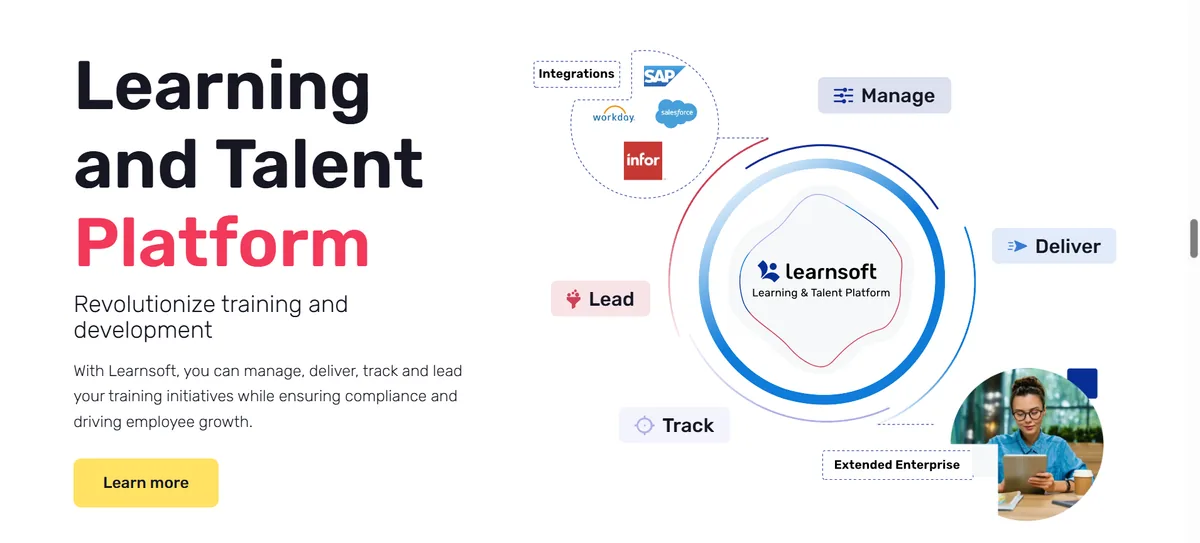
Learnsoft's strongest case is not federal security certification.
It is multi-agency government operations.
The company reports a state-government implementation spanning more than 70 agencies and 26,000 users, with the platform combining learning with compliance, professional development and broader talent-management capabilities.
That is a useful operating model for state governments.
A state may not need the same federal workflows as Meridian or TotaraGov, but it can still face a difficult organisational problem: many agencies, many teams and many locations sharing one learning infrastructure.
Where this platform fits:
- state government
- multi-agency programmes
- compliance training
- professional development
- organisations combining learning and talent management
What to check:
The large multi-agency deployment figures are vendor-reported. Ask for references from government organisations with a similar structure and learner population.
9. Moodle for Government — Best for Open-Source Control
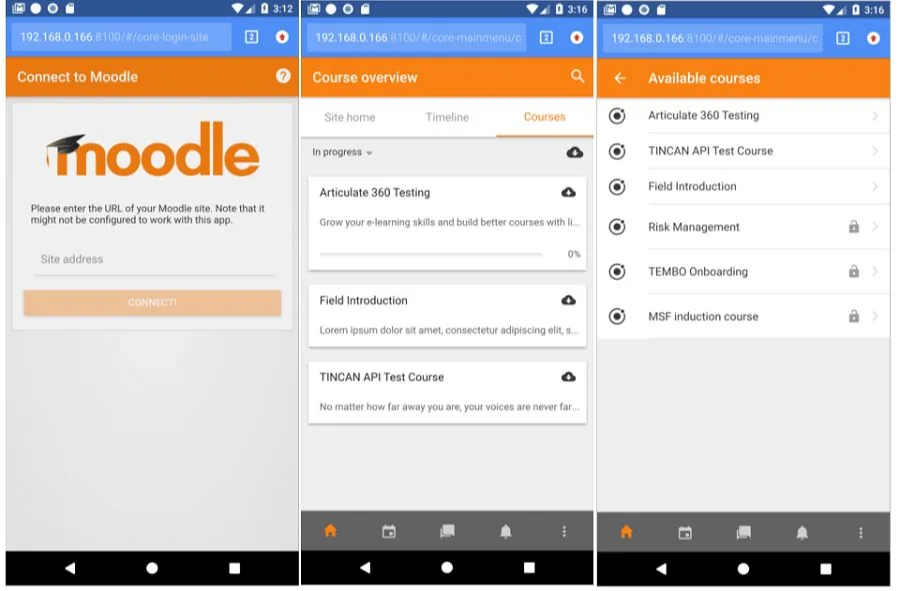
Moodle remains relevant because government buyers do not all want a conventional proprietary SaaS platform.
Its core advantage is control.
A government organisation with the technical capacity or an experienced implementation partner can adapt Moodle around custom workflows, integrations, organisational structures and infrastructure requirements.
Moodle now also has a dedicated U.S. government offering and has achieved FedRAMP Ready status.
The word Ready matters.
FedRAMP Ready is not the same status as the FedRAMP Certified products earlier in this comparison.
Where this platform fits:
- government organisations prioritising open-source software
- highly customised public-sector programmes
- unusual learning workflows
- organisations with experienced implementation teams
- environments where platform control outweighs turnkey simplicity
What to check:
Do not evaluate Moodle as though it were a single standardised product. The actual solution includes hosting, plugins, configuration, integrations, security architecture and support. Those choices determine whether a Moodle implementation is suitable for the environment.
Which Government LMS Fits Your Organisation?
This is the more useful question than asking which platform is number one.
| Organisation or use case | What matters most | Platforms to investigate |
|---|---|---|
| U.S. federal civilian agency | FedRAMP, SF-182, EHRI, federal reporting | Meridian, TotaraGov, Docebo |
| Defense or military | controlled deployment, readiness, qualifications, security | GyrusAim, Cornerstone, Meridian, Acadis |
| Police, fire or EMS | certification, practical training, recertification, readiness | Vector Acadis |
| State government | multi-agency administration, compliance, workforce development | Learnsoft, TotaraGov, Cornerstone |
| Regulatory body | external learners, certification, organisation separation | Blend-ed, TotaraGov, Moodle |
| Government academy | cohorts, instructor-led training, multiple audiences | Blend-ed, Moodle, TotaraGov |
| International ministry or public-sector programme | multilingual learning, organisational separation, deployment flexibility | Blend-ed, Moodle |
| Large public-sector workforce | learning, skills, performance and talent | Cornerstone, Docebo |
A federal civilian agency, a fire academy and an international regulator may all search for the best LMS for government. Their shortlists should not look the same.
Government-Specific LMS Capabilities That Matter
Most LMS feature lists start with course authoring, quizzes, mobile apps and gamification.
Those are useful, but they do not tell you whether the platform fits a government training operation.
SF-182 Workflows
Standard Form 182 is used by U.S. federal agencies for certain requests, authorisations and certifications of external training.
Meridian and TotaraGov both support workflows around SF-182.
If your agency uses it, ask the vendor to demonstrate the full process: request, approval, completion and record keeping.
“We can create a form” is not the same capability.
EHRI Reporting
Enterprise Human Resources Integration is another federal-specific capability found in specialist government LMS products.
Again, Meridian and TotaraGov explicitly support EHRI reporting.
For an agency that needs it, this is a more meaningful selection criterion than social learning or badges.
Certification and Recertification
Many government and regulated roles require qualifications that expire.
The LMS should make it easy to answer:
- Who is currently qualified?
- What expires in the next 30, 60 or 90 days?
- Has renewal training been completed?
- Which version of the training did the learner complete?
- Can we retrieve the record during an audit?
This is where government training overlaps directly with broader compliance LMS requirements for regulated industries. Certification lifecycle, retraining and audit evidence matter more than a simple completion percentage.
Multi-Agency Administration
Be careful when a vendor says it supports departments, branches or groups.
A genuine multi-agency requirement may mean that each organisation needs its own:
- administrators
- learners
- permissions
- content
- reporting
- data visibility
while a central authority retains oversight.
Make the vendor demonstrate this separation with real administrator accounts.
Deployment and Data Separation
Logical separation inside a shared SaaS platform is enough for many public-sector programmes.
It is not enough for every one.
Some government, defense and highly regulated environments need dedicated infrastructure or stronger isolation. That is where the choice between multi-tenant and multi-instance LMS architecture becomes a procurement question rather than a technical curiosity.
Instructor-Led and Practical Training
Government training does not happen entirely in a browser.
Public safety, defense, inspection, technical certification and professional education may involve classrooms, practical assessments, instructors, facilities, equipment and recurring qualifications.
If those workflows are central to your programme, do not accept an “ILT supported” checkbox. Test the actual process.
FedRAMP: What Government LMS Buyers Need to Verify
FedRAMP terminology is easy to misuse.
The FedRAMP Marketplace is the authoritative source for current cloud-service status.
When a vendor mentions FedRAMP, ask:
| Question | Why it matters |
|---|---|
| Which exact product is listed? | The commercial LMS and government edition may be different products or environments. |
| What is its current Marketplace status? | Ready, In Process and Certified are not equivalent. |
| Which security class applies? | Different government workloads require different controls. |
| Which environment are you proposing? | Features available commercially may not all exist in the government environment. |
| What sits outside the authorised environment? | Integrations and connected systems can change the security picture. |
Do not treat phrases such as FedRAMP aligned, government-grade or hosted in GovCloud as substitutes for checking the actual Marketplace record.
And FedRAMP is not a universal government requirement.
It is a U.S. federal framework. State, local and non-U.S. public-sector organisations may operate under completely different cybersecurity, privacy, hosting and procurement rules.
What to Test During a Government LMS Demo
A requirements spreadsheet makes it easy for every vendor to answer yes.
A scenario is harder to fake.
Instead of asking: “Can the LMS support multiple agencies?”
Ask the vendor to create two agencies with separate administrators.
Then ask each administrator to log in and show exactly which learners, content and reports they can see.
Instead of asking: “Can you manage certifications?”
Ask them to show a certification expiring in 30 days, the notification, the renewal process and the historical record after renewal.
Instead of asking: “Are you FedRAMP Certified?”
Ask them to open the FedRAMP Marketplace entry for the exact product in your proposal.
Instead of asking: “Do you support instructor-led training?”
Ask them to create two sessions, assign instructors, set capacity, record attendance and show the completed training on a learner’s record.
Instead of asking: “Do you have audit reporting?”
Give the vendor a task:
An auditor wants evidence that 500 people completed the correct version of mandatory training between January and June.
Ask them to produce the report.
Instead of asking: “Is your LMS accessible?”
Ask for current accessibility documentation, then test the actual learner journey: sign-in, navigation, content, assessment and certificate.
Instead of asking: “Can we train contractors?”
Create an employee and a contractor.
Ask the vendor to demonstrate how their access, administration and data visibility differ.
These exercises tell you much more than a 150-row feature matrix.
Frequently Asked Questions About Government LMS Platforms
What Is a Learning Management System for Government?
A learning management system for government is software used to deliver, administer and document training for public-sector employees, contractors, partners or external audiences. Government implementations commonly place more emphasis on security, accessibility, certification, audit records and organisational controls than a standard corporate LMS.
What Is the Best LMS for Government Agencies?
The answer depends on the agency. Blend-ed fits multi-organisation public-sector programmes; Meridian and TotaraGov fit federal training administration; Vector Acadis fits public-safety and readiness training; Cornerstone fits large government workforces; and GyrusAim is relevant to defense-oriented training.
What Is the Best LMS for Federal Government Training?
Meridian, TotaraGov and Docebo Federal are strong starting points for U.S. federal buyers, while Cornerstone and Acadis address different federal workforce and readiness use cases. The correct shortlist depends on the required security class, training workflows and integrations.
What Is the Best LMS for Defense Contractors?
GyrusAim, Meridian, Cornerstone and Acadis are worth investigating. Gyrus has a specific defense and contractor focus; Meridian is strong in federal training administration; Cornerstone adds wider workforce capabilities; and Acadis is relevant when training is tied to operational readiness.
Can One LMS Support Several Government Departments or Agencies?
Yes. The important question is how much separation the LMS provides. Different agencies may need their own administrators, users, content and reporting while a central team maintains cross-agency oversight.
Does a Government LMS Need FedRAMP Certification?
Not always. FedRAMP is relevant to U.S. federal use of cloud services. State, local and international government bodies may have different security, privacy and data-hosting requirements.
What Kind of LMS Works for Regulatory Bodies?
Regulatory bodies often need to train people outside their own workforce. Look for organisation separation, external learner management, certificates, recurring requirements and audit records. Blend-ed, TotaraGov and configurable Moodle deployments are worth evaluating for these operating models.
What Should a Regulated Workforce Look for in an LMS?
Prioritise role-based assignment, certification expiry, retraining, historical records, audit trails, access controls and reporting. For a regulated workforce, proving that the right person completed the right requirement at the right time is usually more important than adding another content feature.
Choosing the Right LMS for Government Training
Start by eliminating platforms that cannot meet the non-negotiable requirements.
If the procurement requires a particular federal security status, establish that first.
If several agencies or departments will share the platform, test the organisational model before discussing course authoring.
If qualifications expire, make the vendor demonstrate recertification.
If classrooms, instructors or practical assessments are important, evaluate those workflows rather than treating the project as pure e-learning.
The resulting shortlist will depend on the organisation.
Blend-ed deserves consideration when the challenge is multi-organisation, multilingual or external public-sector training.
Meridian and TotaraGov are difficult to ignore when federal workflows such as SF-182 and EHRI are central.
Acadis is unusually well matched to public safety and readiness.
Cornerstone makes sense when learning is part of a broader government workforce strategy.
GyrusAim brings a clearer defense orientation than most general-purpose LMSs.
Docebo Federal brings enterprise learning into a certified government environment.
Learnsoft is relevant to state-level, multi-agency programmes.
Moodle remains the option for organisations that value open-source control and are prepared to own more of the implementation.
The useful question is not which LMS does the most.
It is which LMS fits the way your government organisation actually trains people, manages access and proves competence.